In India, one concern among parents is very common. Play will mean “less study” or children might fall behind in reading, writing, and maths. Also that schools might not treat play seriously unless tied to visible academic progress. This mainly happens because many families keep comparing different schools on the basis of their academic performance, and many still expect academic drilling.
Another challenge is that play based learning can only work well if teachers are trained and classrooms are set up properly, as it can become an unstructured learning instead of a meaningful one.
Plus, it was found that children under 8 learn best through concrete experience, by moving their muscles, enhancing their gross motor and fine motor skills, by strengthening their language that builds their communication, and social interaction shaping their minds better instead of sitting and passively learning.
This has made play based learning an important element in pre-primary and early primary classes. And the question currently is not whether play based learning is essential or not, but how much of it can be practically taught to kids.
This blog is a dedicated guide on what play based learning is, what are the types they can use to build play based learning at home and any other questions that a parent might have while picking the right type of learning.
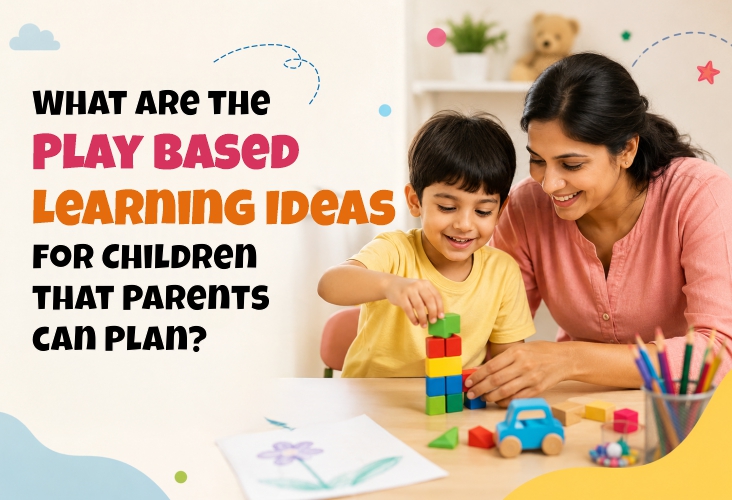
Learning that involves play is called play based learning where the educational approach is child-centered but uses play as a primary medium for learning.
It lays focus on hands-on learning where children are encouraged to explore freely, experiment and learn from trial and error methods, and accordingly solves problems by themselves. Learning from this method helps them build their self confidence, shape their social interaction, and strengthen their emotional confidence.
There’s Jean Piaget’s theory of cognitive development that says intelligence changes as a child grows and they construct knowledge by interacting with their environment. Similar Lev Vygotsky’s socio-cultural theory emphasizes the role of social interaction and how collaborative play shapes cognitive development.
The biggest confusion in a parent when it comes to teaching kids is what play serves as learning, so that they can plan learning in a structured play which feels natural yet provides the best play learning environment which builds holistic growth in kids.
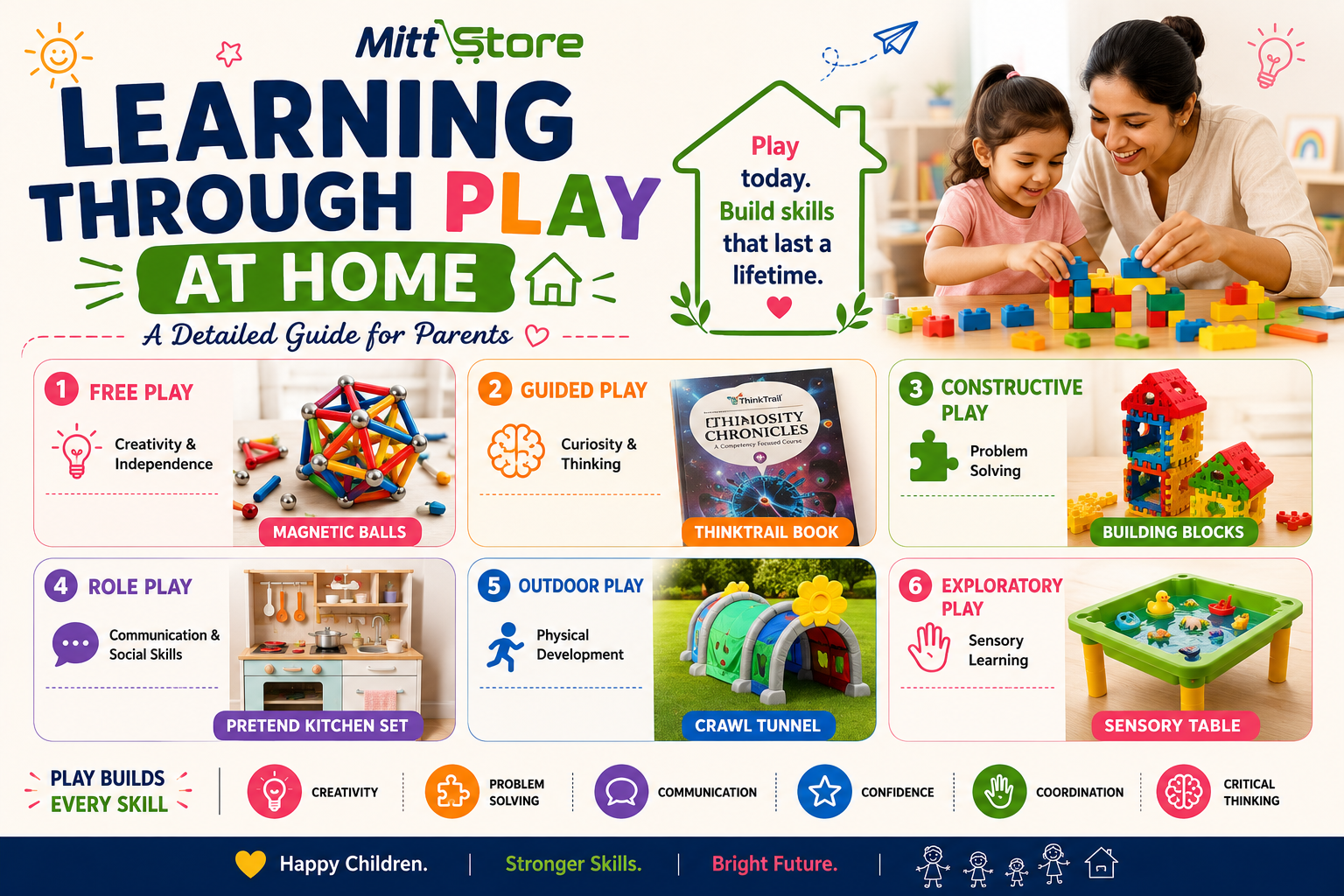
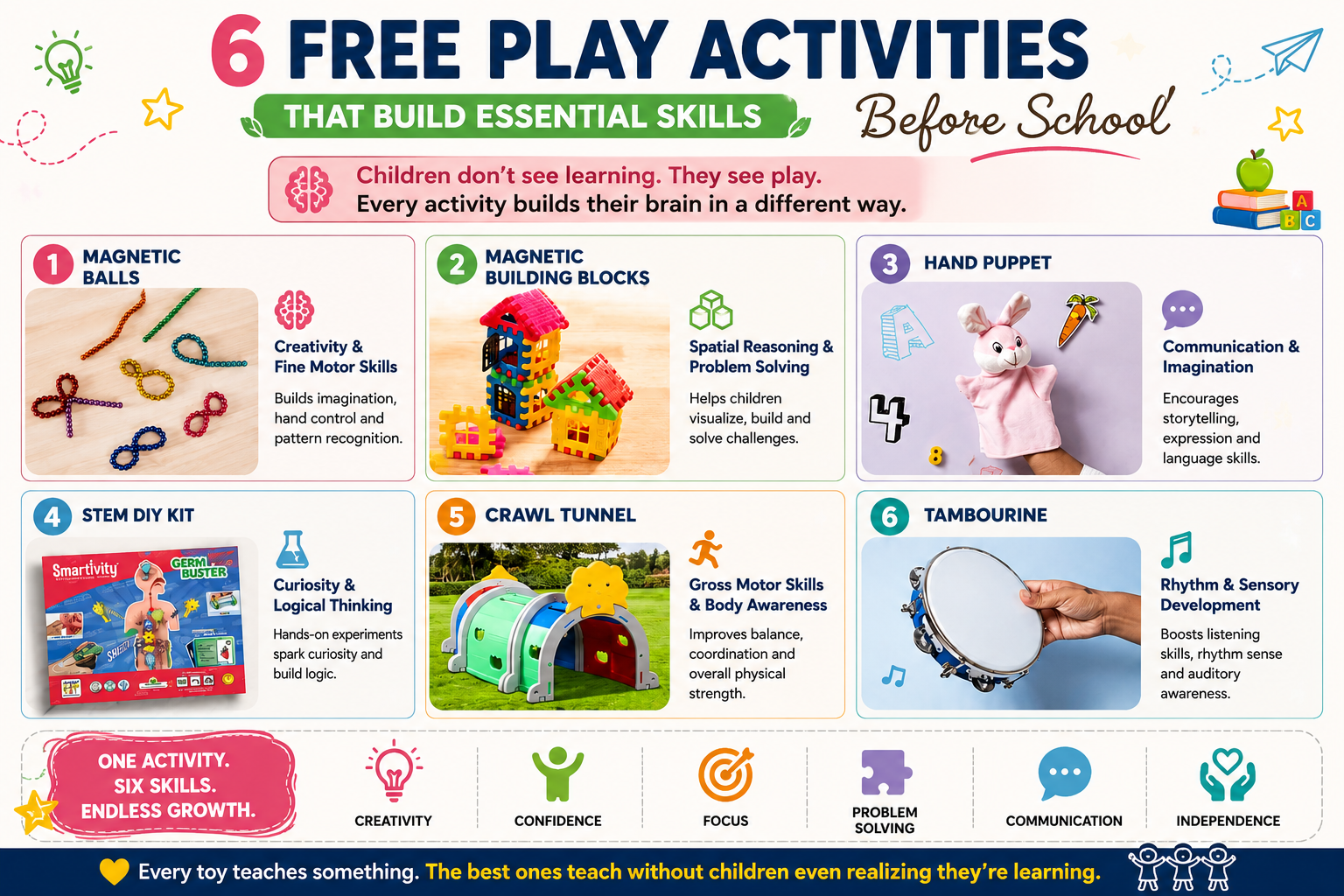
It refers to the unstructured, voluntary play where your kids get free options to pick the types of games that they wish to play as per their interests, moods, and the time of the day. Free Play is helpful as it helps children solve their problems by themselves, shaping their executive functioning skills that helps them to plan better, stay focused more, and juggle between tasks.
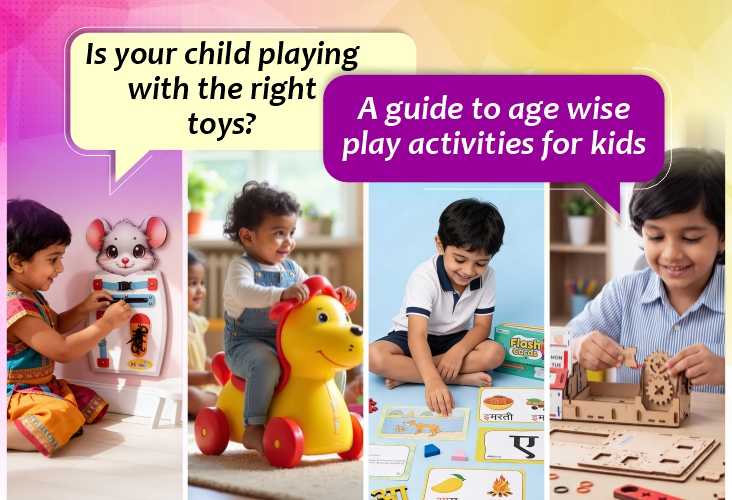
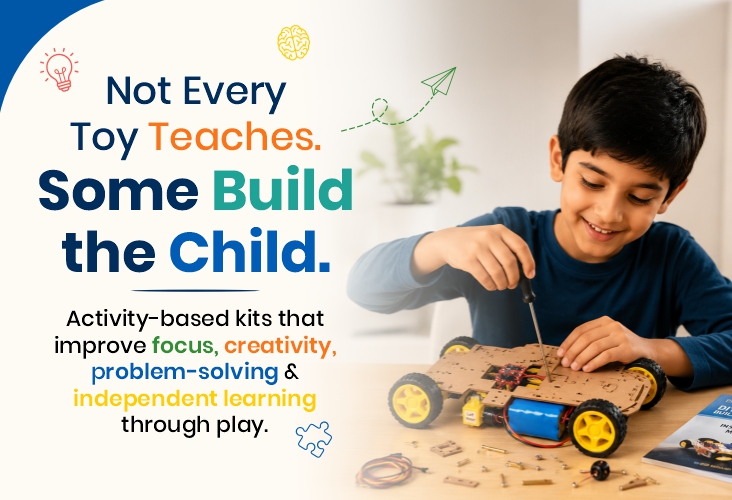
You can try toys like Colorful Magnetic Balls Set for Kids, Building Blocks & Construction Sets, Robotics & STEM Construction Kits, Puppets, Musical Instruments, Indoor & Outdoor Play Equipment, as they can do everything they can imagine, can build open-ended for storytelling, they are able to experiment, modify, and create their own models, which will help them to imagine adventures on their own.
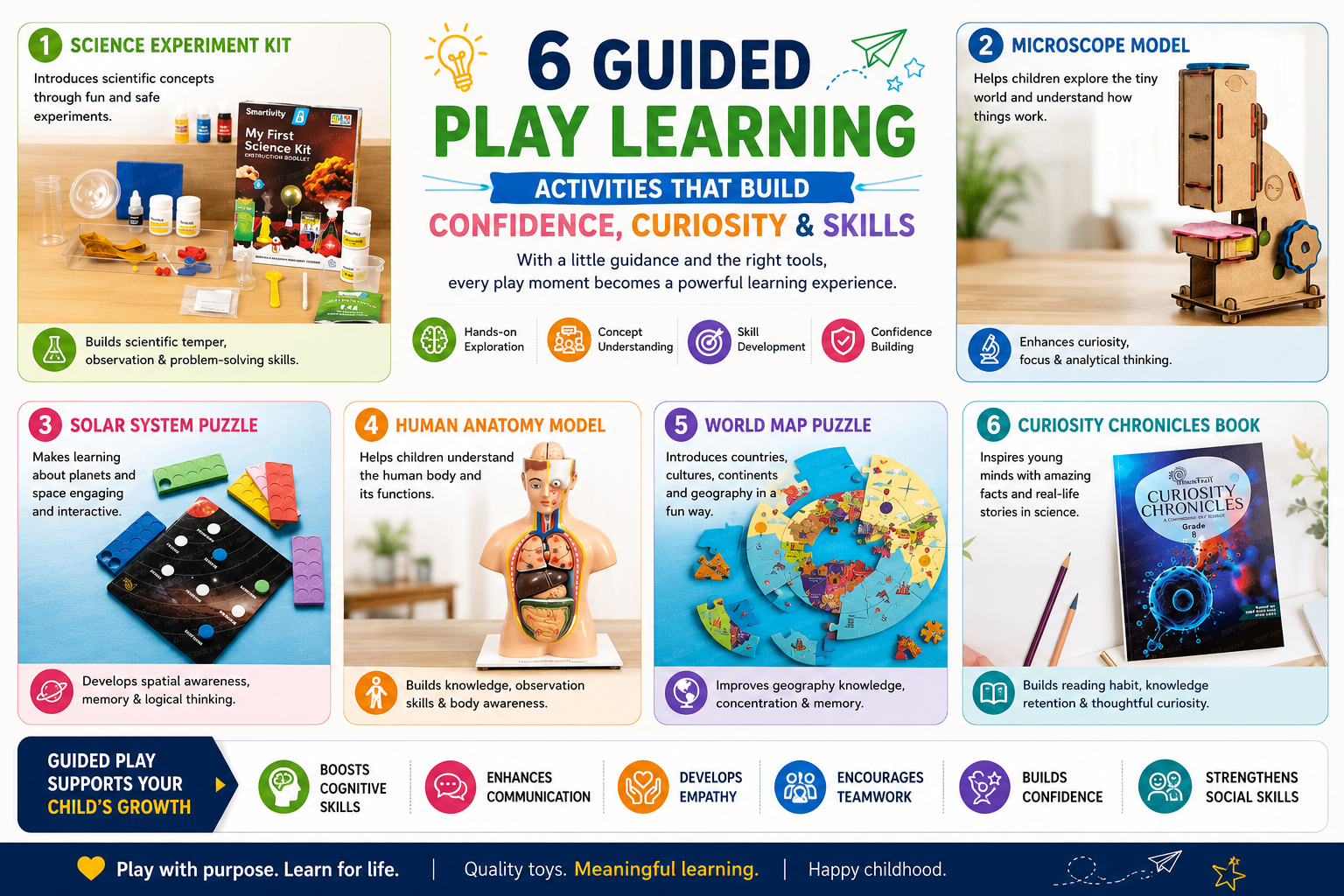
It’s a type of play that involves subtle adult guidance so that children’s activities can be monitored and shifted towards learning some specific goals while also making them feel that they are free to play. It can be implemented by asking them open ended questions while they are playing like ‘how can it be built differently’, ‘what new ways can we play the same game’, these questions add perspective and bring a new way to see the same things in kids from an early age.
It also has a higher chance of building academic skills as the guidance can be given greater attention with respect to the academic curriculum. Guided Play Based Learning enhances the learning outcomes while kids can continue experiencing their joy of learning.
You can pick a ThinkTrail book for your child as per their grades as it covers all the academic syllabus while providing an insightful 3D & AR experience where your children can look through the concepts, explore more connected topics, and solve fun assessments that build their understanding better.
You can also get them science experiment kits, human anatomy models, World Map & Geography Learning Games, Solar system & Space Models, Microscope & Observation kits from Mittstore. These games make learning fun while also keeping it as per the academic curriculum. So the fear of ‘are the kids learning while playing’ becomes the least here.
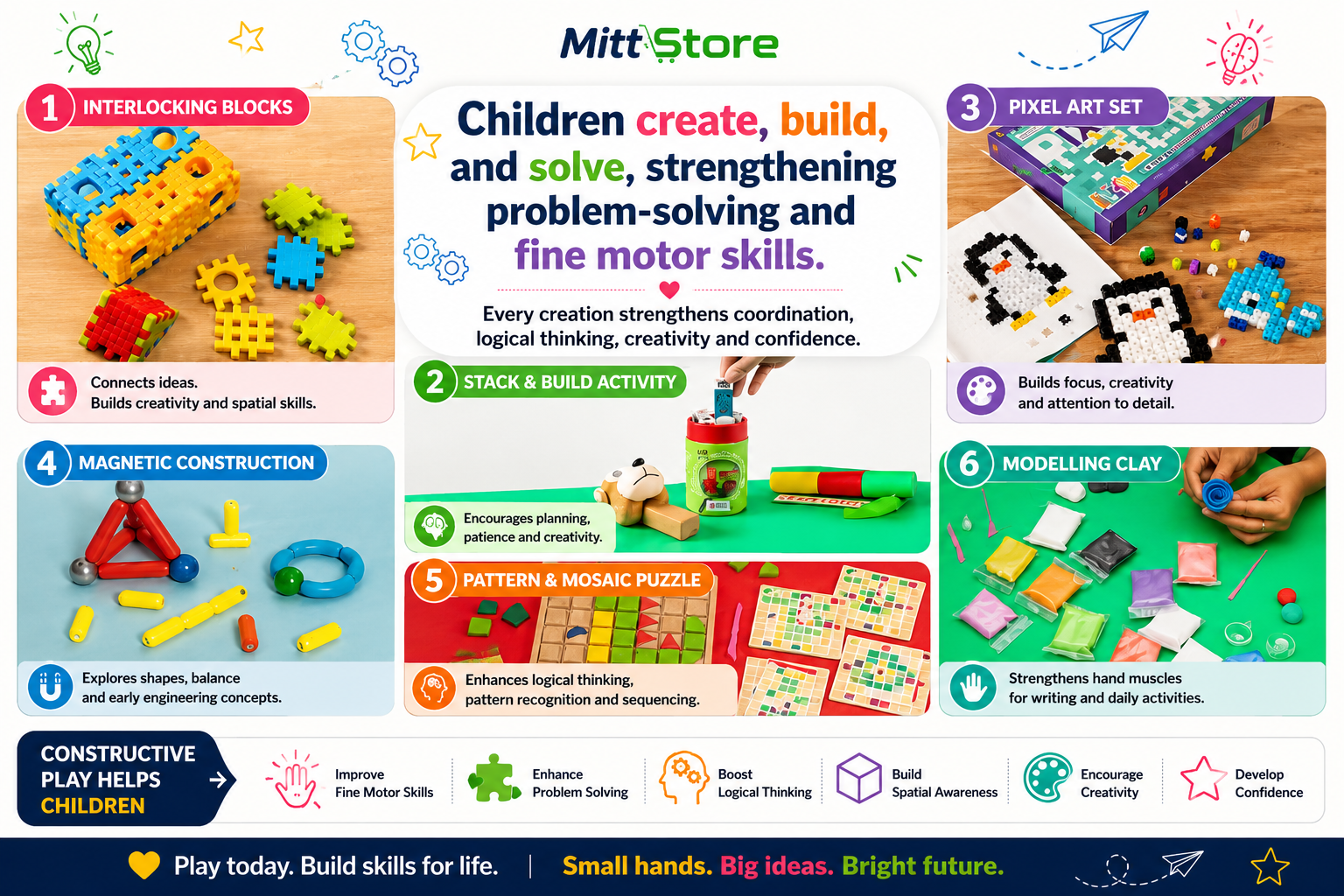
Play where kids think they are playing but they have been building something new is constructive play. Kids sharpen their problem-solving skills as they come across a variety of problems and sit to solve it all by themselves.
It can be like assembling puzzles, or they build towers with blocks, stack cups, and build different shapes with clay. This strengthens their cognitive ability to understand the shapes, visualize their positions and their dimensions whether 2D or 3D, and accordingly use them, move them, and control the moves with their skills.
It also helps develop fine motor skills, which is the coordination of small muscles in the hands, wrists, and fingers that work together to help kids do their daily tasks like writing, buttoning clothes, tying shoelaces, etc. It also strengthens critical thinking by letting them do trial and error to reach the right answer.
You can buy interlocking construction blocks, 3D puzzles, Mosaic & Peg puzzles, Clay sets, Gear Builders, Smart Sticks, from Mittstore and help your kids shape their constructive thinking better.
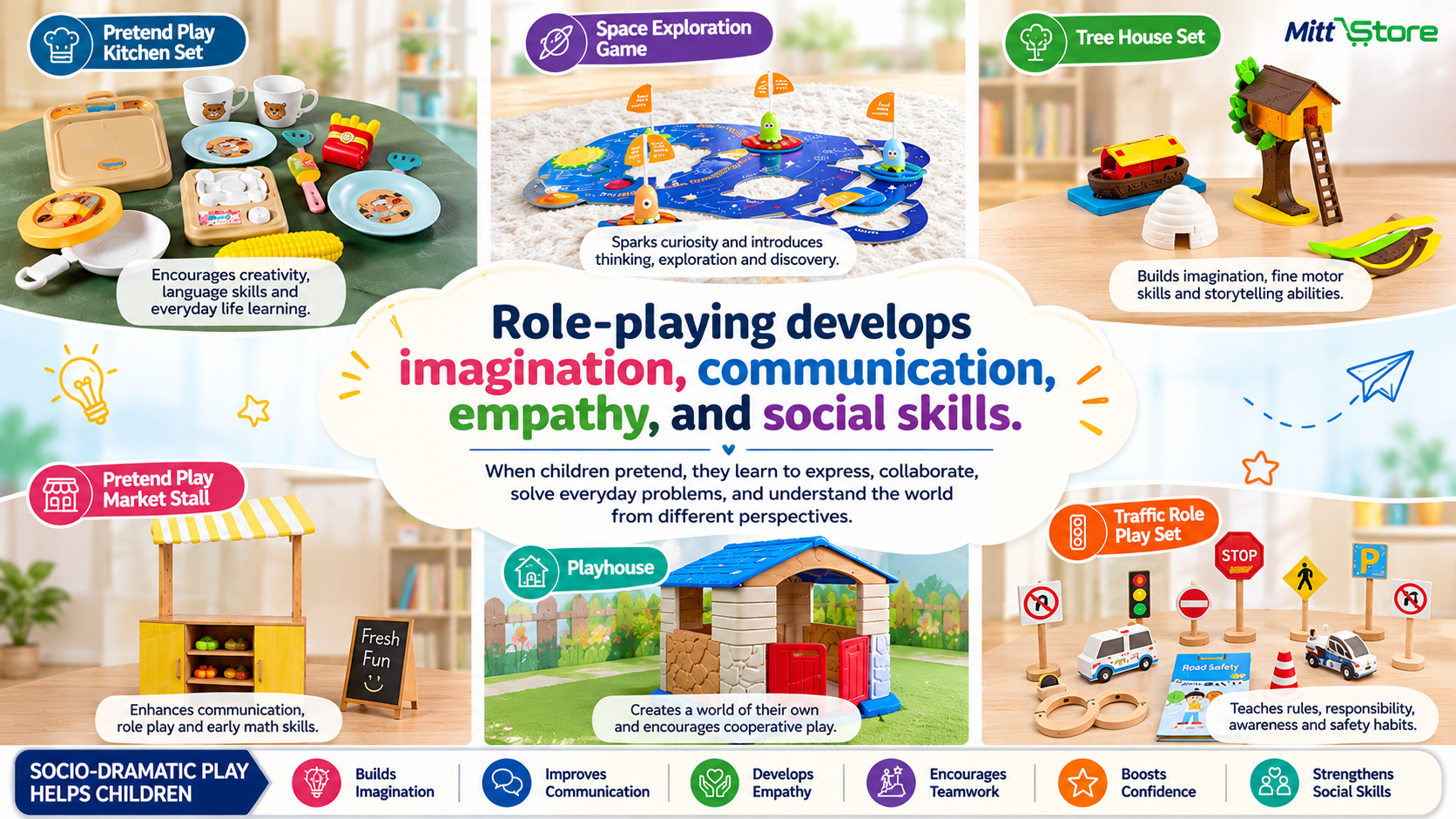
Play where children create their own imaginative stories or act out their understanding from the real-world situations is socio-dramatic play. Kids role-play the scenarios where they take up various roles like doctors, teachers, police, firefighters, etc.
When kids start playing these roles they build empathy within them, while also understanding the emotional struggles behind all these roles. It also helps them in building their vocabulary, shaping their language development and communication skills better. It also builds negotiation skills in them while also imbibing team work and collaboration skills in them.
You can buy a mini pretend play cooking set, pretend play market stall for kids, playhouse, tenthouse, Plastic and Paper Mapology Houses for Kids, Traffic police role play set for kids from Mittstore and help them experience socio-dramatic play right from your home.
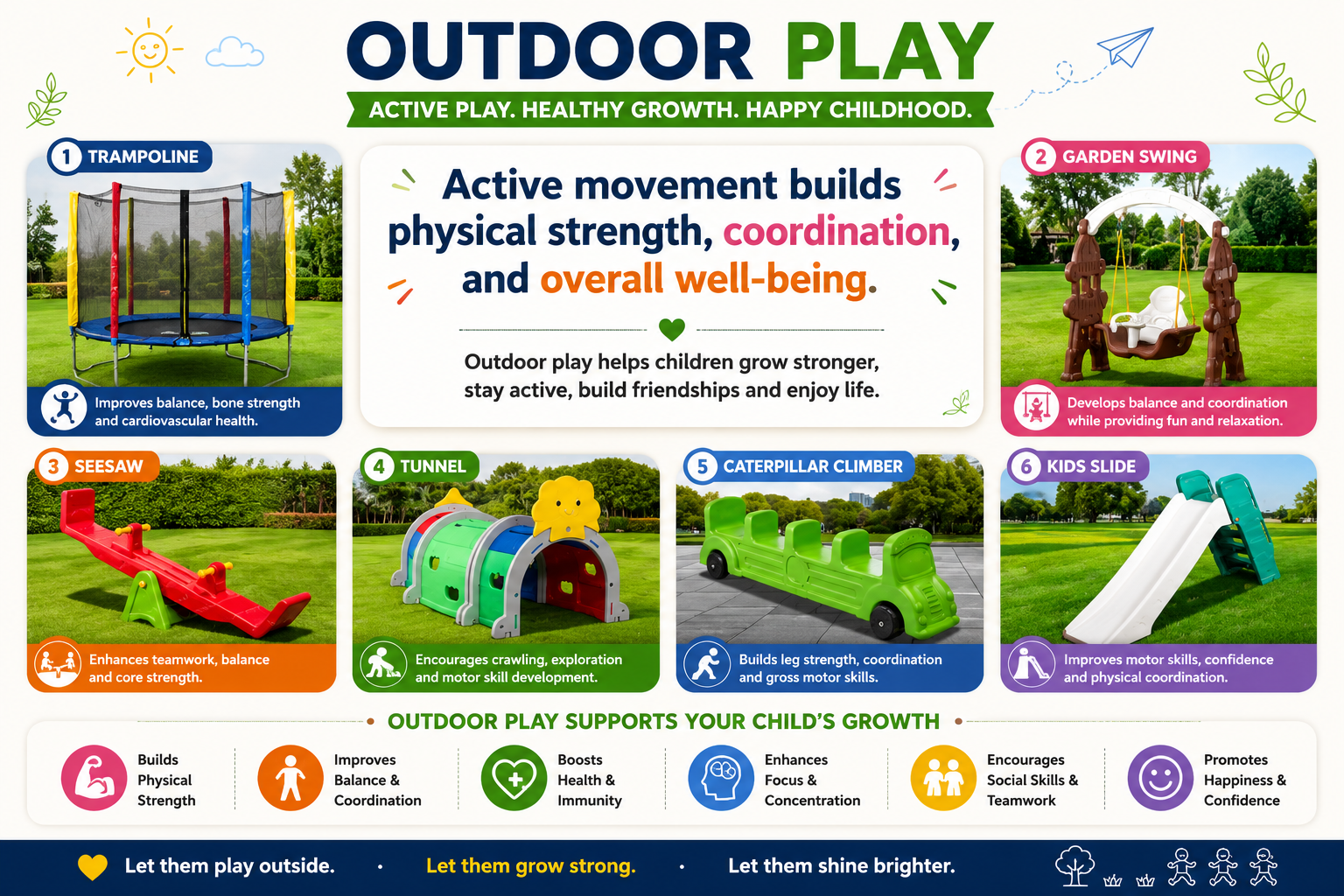
Play that includes physical activities and play in a natural or outdoor environment is outdoor play. It can be kids climbing, running, playing on swings, enjoying slides, jumping on trampolines, and using the best of nature to enjoy outdoor play.
The major benefit of outdoor play is strong gross motor skills which are large muscle groups in the arms, legs, and torso, that coordinate together for whole-body movements so that one can walk, run, jump, climb, balance, comfortably.
There’s a dedicated section of all the outdoor play resources on Mittstore that ensures kids have all kinds of experiences when it comes to outdoor play. It includes trampoline, playhouse, crawl tunnel, slides, swings, seesaws, group play passenger bus, group roller, arch sets, gym ring, hopscotch, ramp tracks, and more. You can check the whole collection on the website.
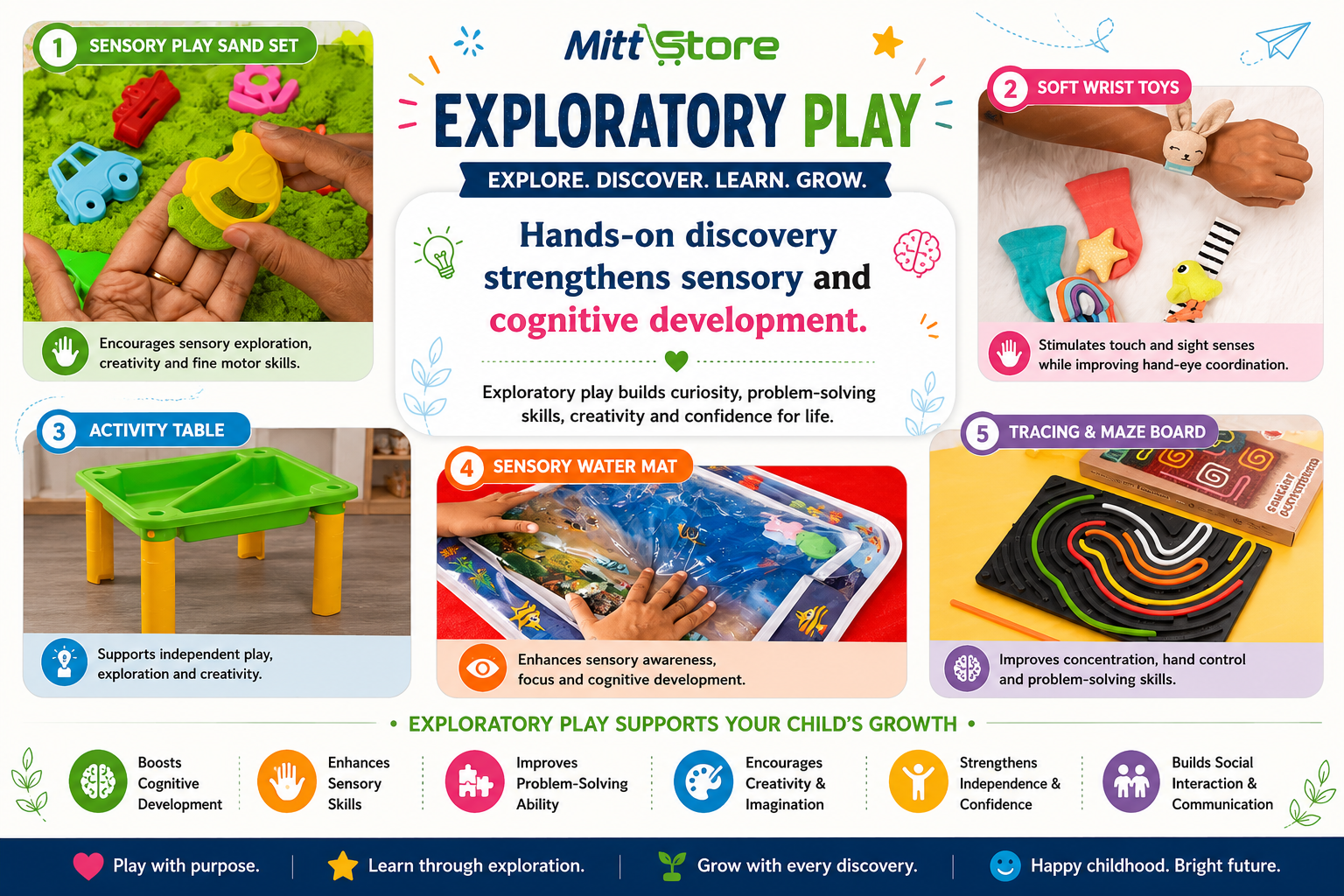
Play where children use their senses to understand the movement of the materials and objects around them is called exploratory play. So, it is also called sensory play. The activities like water play, sand play, or textured play makes a child curious and enhances their sensory development, helping them observe better, test assumptions, minimising the unconscious errors that might be different from reality.
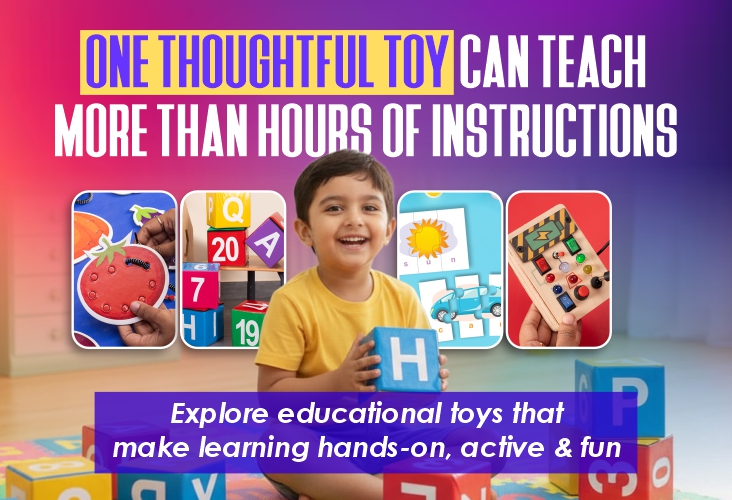
A child’s brain becomes able to seamlessly switch between the different tasks, concepts, and mental perspectives. You can shop creative sand playset, sand & water table, water play mats, tactile pattern & shape creator, baby wrist rattle & foot finder set, spinner toys, busy boards, kaleidoscope, from Mittstore and let your kids experience what sensory play feels like.
All the above mentioned are types of learning through play at home. They come under the foundational theories that emphasize the relevance of play-based learning as one of the most effective educational approaches.
Learning through play has a wide range of developmental benefits which helps parents in shaping the holistic growth of their children. While kids feel they are playing and having fun, parents are relaxed because they know kids are learning without realising that they are.
The smart planning with Mittstore helps parents bring a variety of toys for their kids and every toy has a purpose behind it. That’s the smart parenting modern parents are thriving in with Mittstore!