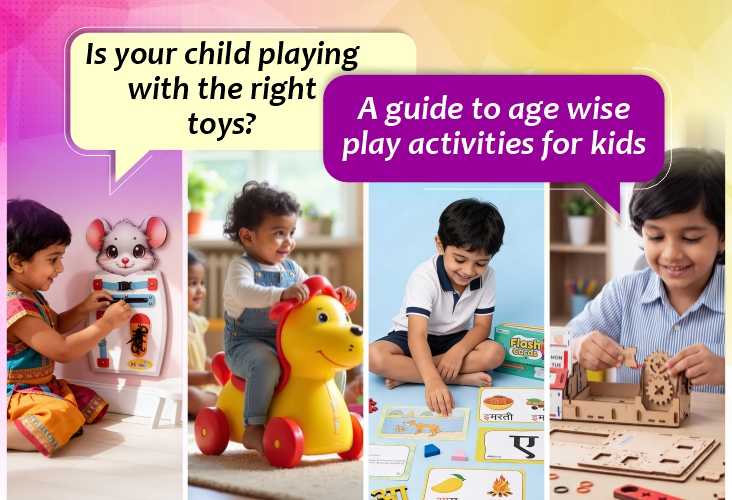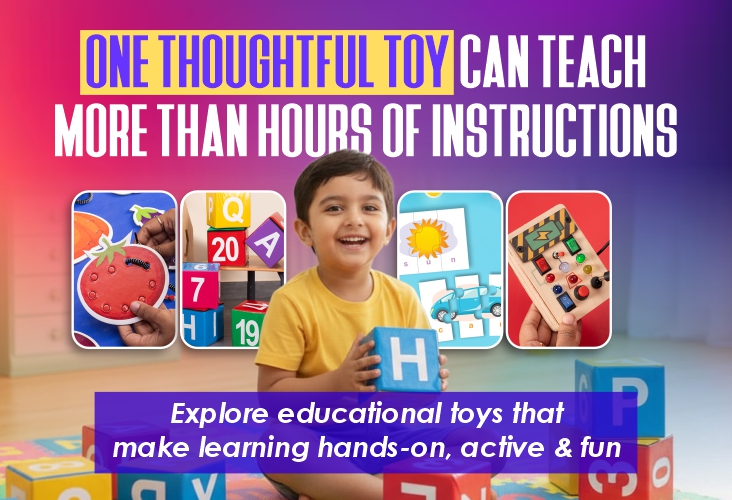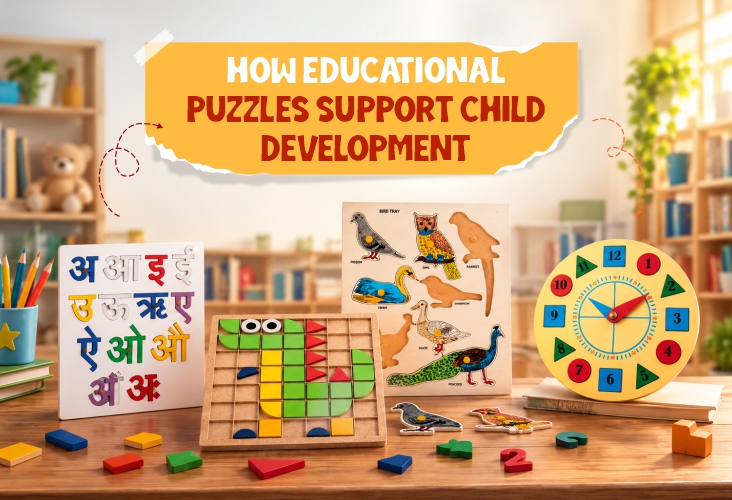
In today’s world, children are naturally curious and love exploring the world around them. When learning becomes fun and interactive, they develop essential skills that provides moment of joy and journey. Educational Puzzles provide a perfect combination of play-based learning and encourage children to discover new things. Whether it is a jigsaw puzzle, alphabet puzzle, number puzzle, block puzzle, or others, every puzzle games for kids encourages young minds to grow, discover and learn.
Puzzles for kids are considered more than just toys, as it stimulates logical thinking as children are challenged to recognise shapes, patterns and relationships between different parts. Puzzles have been proven to significantly impact a child’s motor, cognitive, social, and overall development at an early age. Most importantly, these educational toys for kids encourage children to learn through independent play and build skills that are essential in future development.
Educational puzzles are considered powerful learning tools and support a child’s cognitive development.
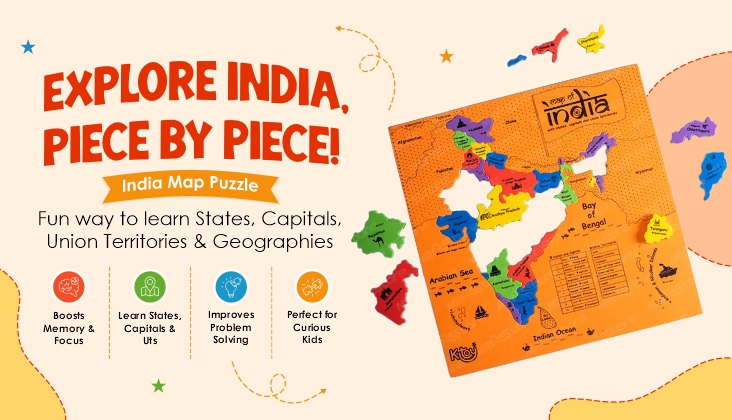
Every child attempts various ways to assemble and create a puzzle, and even after several mistakes, they correct them independently. It is like a child is engaged in a brain workout in puzzle play. For Example, imagine your child being engaged in completing an India Map Puzzle, and at first, they may mismatch states or confuse with patterns. After a few attempts, with focus and determination, they begin recognising different shapes that exactly match patterns. This helps in understanding the process and simply strengthening logical thinking and problem-solving skills.
With every puzzle game, children learn new and different concepts at the time of enjoying the process. Instead of just memorising the process, children are involved in understanding instructions, following logical sequences, and discovering ways to assemble patterns on their own. This hands-on learning approach makes remembering and understanding concepts better, which leads to brainstorming and cognitive development.
As the ability of the children grows, they stay focused on learning for longer periods. The improvement in attention plays a crucial role in completing everyday learning tasks.
As parents, have you noticed how focused children become when they are involved in a game of puzzle?
That’s because puzzles naturally enhance curiosity and encourage children to develop longer attention spans.
For completing one game of the puzzle, a child needs to be focused for extended periods and remember different things, including patterns, positions, numbers, and shapes. As children manipulate components of the puzzle with care and attention, they engage in visual-spatial awareness and reasoning. The continuous involvement and practice sessions support accuracy and improve concentration. From a simple wooden puzzle for kids to block puzzles and map puzzles, each challenge involves children in improving their focus and developing patience to complete a task right from the start.
Hence, staying focused is only one part of the learning process and journey for the children. Also, these small moments of exploration in a child’s learning help in developing problem-solving skills that they use in everyday life.
Every puzzle is a mini adventure that is waiting to be solved. Children engage in finding the right piece, figuring out the correct pattern, and where it fits. This helps in building one of the most valuable skills that supports a child’s development: problem-solving skills.
According to the theory of cognitive development by Jean Piaget, children gain skills by they actively interact and explore with their environment. Similarly, educational puzzles effectively support this idea, as it helps in encouraging children to think independently and discover solutions on their own. Most of the time, children naturally engage in different approaches to building puzzles that help in teaching them flexible thinking and resilience.
Every challenge in the gameplay helps them to make informed decisions and become highly confident problem solvers. Hence, these experiences not only help children strengthen creative thinking and problem-solving abilities but also prepare them to solve challenges with confidence.
With day-to-day practice, children become better at solving puzzles; they begin to rely less on instruction and guidance from teachers or parents. Completing a puzzle with their own efforts and progress gives a sense of accomplishment that reinforces motivation and self-esteem. Every successfully completed jigsaw puzzle or number puzzle enhances independence and develops a belief that childr0oollen become problem-solvers.
On the other hand, this level of confidence extends beyond just playing puzzles. Every child becomes more interested and willing to explore new ideas, activities, and make decisions independently. By celebrating small achievements, educational puzzles help nurture a positive mindset that helps kids to become highly confident and independent learners.
Educational puzzles play a crucial role in the child’s development as it is much more than just a source of game or entertainment. It is considered a powerful play-based learning tool that maximises development and growth. From enhancing cognitive abilities to improving concentration, leading problem-solving abilities, and building confidence, educational puzzle offers meaningful experience of learning to kids.
Every activity in the puzzle game builds essential skills that are directly proportionate to a child’s development and make learning more engaging and enjoyable.
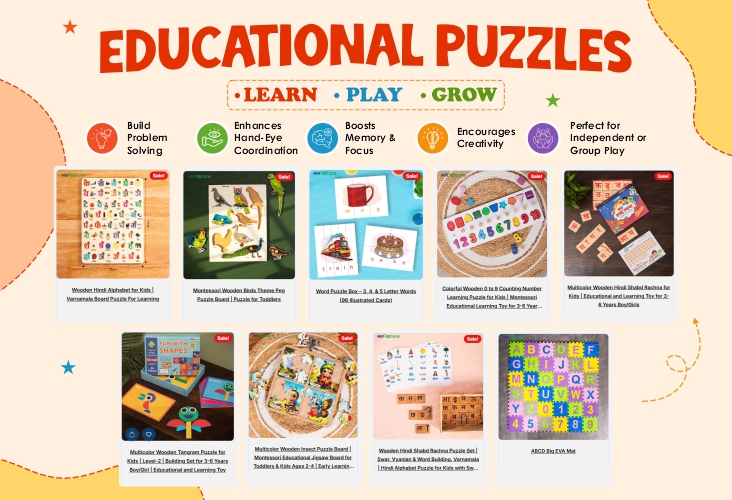
At Mittstore, our aim is that children’s learning should always be interactive, fun, and engaging. Thus, our collection of Educational Puzzles is effectively designed to help encourage them to discover, explore, and develop crucial skills for their overall development.
After all, every piece of puzzle solved today helps children to become more confident and capable for tomorrow.
Puzzles effectively support children development and growth by improving memory, concentration, logical thinking, hand-eye coordination and fine motor skills.
Yes, Children can learn to observe, try different solutions, identify patterns and complete task while solving puzzles.
Puzzle helps in allowing kids to learn through hands on activities and play and makes process of learning highly enjoyable, engaging and interactive.
Parents should make choice in choosing right puzzle by considering child’s age, interests, learning level and the skills they need to develop. Every game of puzzle should be challenging enough that can help in encouraging thinking level without being too difficult for children.