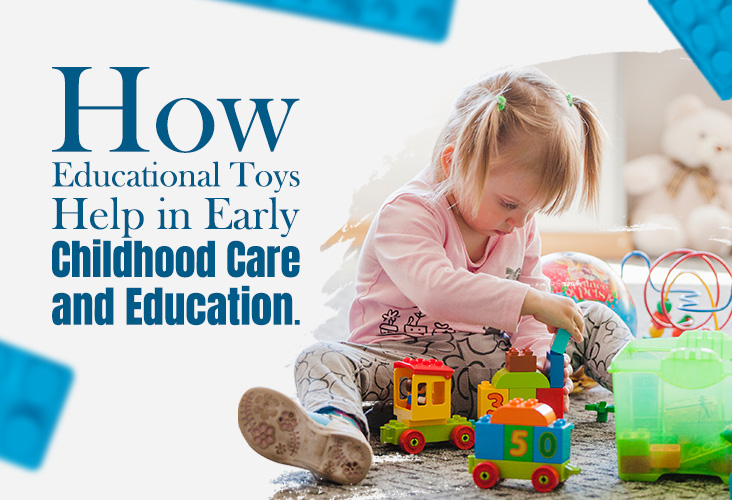
A toy is never just a toy. Sometimes, it is a storyteller’s first stage, a little scientist's first laboratory, and a tiny mathematician’s first classroom.
From the moment children come into this world, they possess curiosity and an innate desire to explore. Every giggle and grab is a step on their incredible learning journey. Imagine a little learner trying to fit a square block into a round hole. They push, turn it, try again, and finally find the right shape. Nobody has given them a lesson, yet they have just tried to explore shapes, sizes, logical thinking, and problem-solving. This is known as the magic of learning through play.
Early childhood is the critical phase for development and learning, as it is full of little experiments. Every playful activity, every question, and every failed attempt becomes an opportunity to learn something new and creative. And one effective way to nurture this natural love for learning is by introducing children to educational toys that make creativity, exploration, and learning a part of everyday play.
Early Childhood Care and Education (ECCE) focuses on nurturing young learners towards their development in social, cognitive, emotional, physical, and language skills. It is more than just learning colors, the alphabet, and numbers. Educational toys make this journey highly engaging as it allows children to create, explore, experiment, and learn at their own pace.
How Do Educational Toys Support Child Development in Different Areas?
Every toy has different aspects of learning for young learners and introduces them to new learning opportunities. Educational toys have the power to engage children in meaningful play, unlock their potential, and provide a chance to express their imagination. And the Best Part?
Children often learn essential skills through a single activity without even realizing it.
Here are the areas where educational toys make a difference.
Creativity and Language Development
Early childhood is one of the best times for children as little minds start to turn simple ideas into pictures, stories, and endless possibilities. Newborn babies or infants start speaking by listening to familiar voices. They begin developing communication skills by observing facial expressions, sound integration, and familiar voices around them.
Also, for young learners, consider educational toys such as puppets, storybooks, or flashcards. They provide a platform for children to create narratives and engage in imaginative playtime. For example, little learners engaged in playtime with animal puppets and imitating their sounds build their own stories and engage in simple conversation.
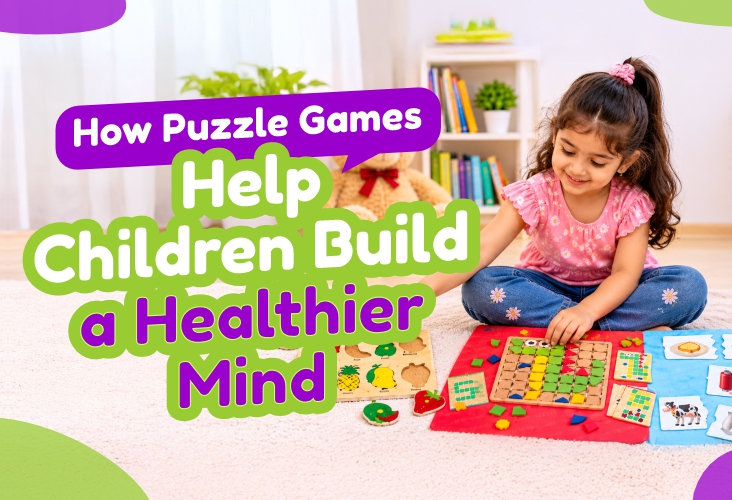
Art supplies include coloring materials and drawing tools that allow young ones to experiment with shapes, textures, and colors. Shape sorter, memory cards, building blocks game, and sequencing cards help children to understand patterns and maximize visual identification.
For children, think of every educational game as a tiny brain gym. Every challenge provides another reason for little learners to observe and think.
Emotional and Social Development
Group activities and collaborative games help young learners to interact with others, develop patience, and understand emotions. With educational toys, kids can engage in collaborative play and focus on sharing a toy, waiting for their turn, and learning to handle wins and losses gracefully.
Even little babies start building social connections through simple interactions. Gentle rattling toys, soft toys, and colorful activity games encourage interaction and visual engagement with parents or caretakers.
In essence, pretend play games, soft toys, rattling toys, cooperative building games, and group board games are key educational toys that help support emotional and social development.
Creativity and Imagination
What happens when you gift a box full of brightly colored building blocks to a child?
They could focus on making a castle, a tower, a car, or even a spaceship from them.
This is the great thing about open-ended play. There is no single way, no limit to approach, no fixed approach for what children can imagine.
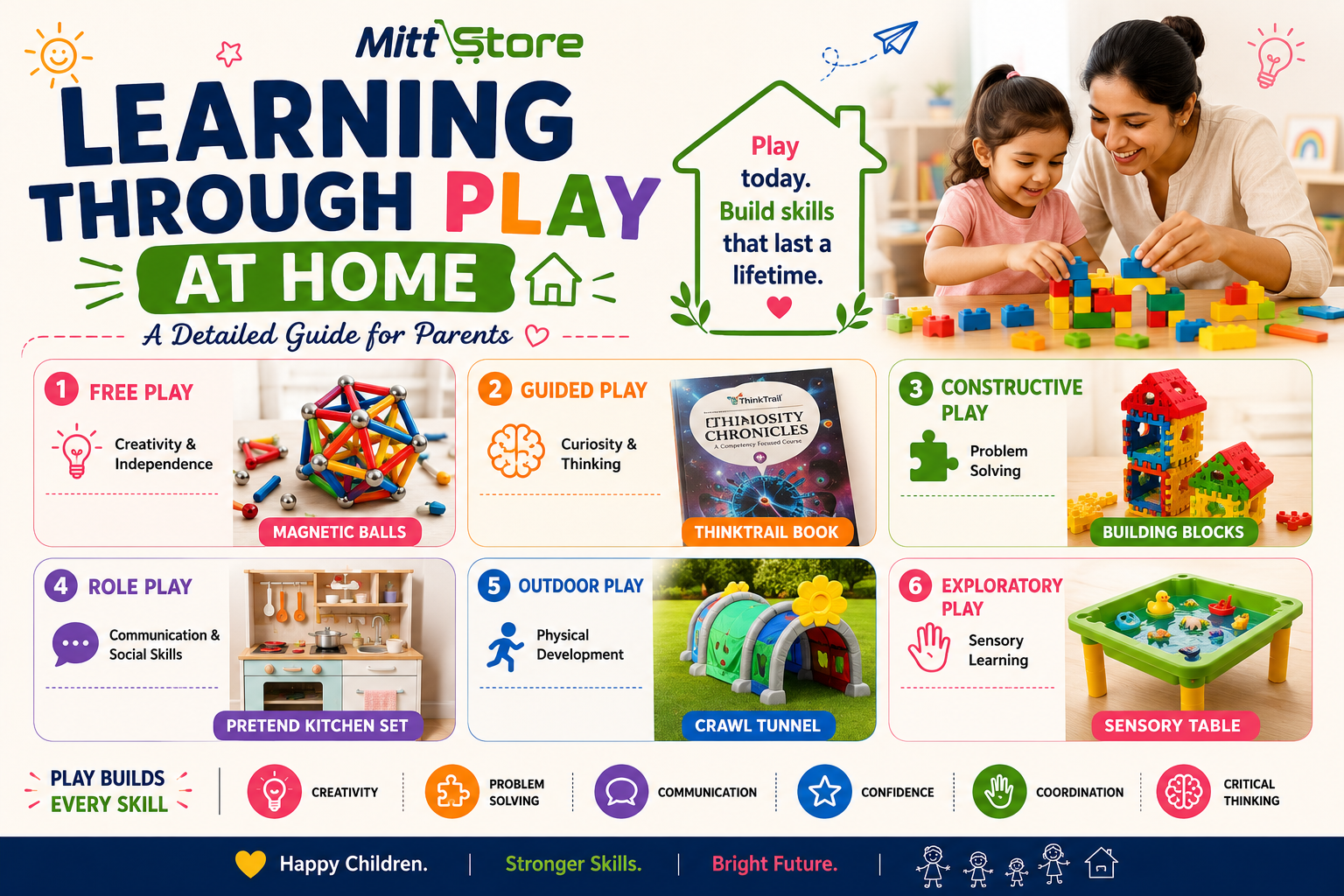
Construction toys, art and craft kits, and pretend-play sets help in encouraging children to experiment with different ideas and express themselves. These educational toys provide fertile ground that supports the limitless imagination of children.
Give your little learners a handful of creative materials and watch them give shape to the universe.
What Makes an Educational Toy Truly Valuable?
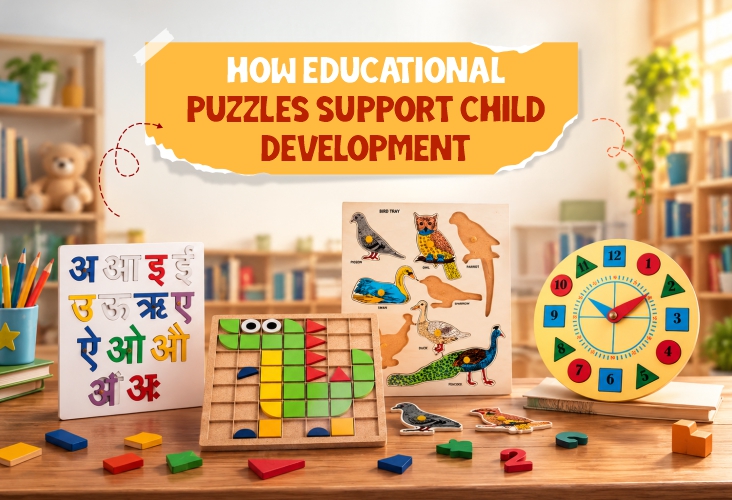
It is not important that every toy needs fancy sounds, lights, and different types of features to engage children and make learning exciting. Sometimes, simple building blocks, alphabet boards, and puzzle games do wonders for the imagination of young learners.
A highly valuable educational toy in ECCE is one that helps support children’s early development and learning needs. It encourages little explorers to think and understand basic concepts through playful experiences that support their overall growth.
Learning Opportunities- Search for toys that enhance memory, creativity, logical thinking, and problem-solving skills.
Hands-on Play and Interaction- Toys that allow young minds to build, match, touch, and experiment, making learning highly engaging.
Creative Freedom- Pretend play and open-ended toys encourage children to explore different possibilities rather than following a simple way of playing.
Engagement and Fun- It is important that educational toys provide excitement for children to play with while learning and introducing new concepts.
Remember, create a stimulating playing environment at home by involving specific play and involving toys that provide educational benefits in learning and development. The toys that provide a child with effective opportunities, including to grow, create and learn.
During childhood, every little experience turns into memories and leaves something valuable behind. A colourful creation, a solved puzzle, a new sound, word, or group game becomes a small step towards learning and growing.
Educational toys make early experiences highly enjoyable while children focus on developing essential skills such as problem-solving, communication, coordination, creativity, and social interaction. This is an important part of Early Childhood Care and Education; it encourages young learners to explore the world, express themselves, and grow with confidence.
Hence, whether it is a simple game of puzzles, building blocks, or favourite puppets, give your little learners more than just play. Eventually, the best learning experiences often start with a little play.
FAQs
1. Can everyday toys and games help children in learning?
Yes, absolutely! Even everyday small toys including stacking cups, blocks, car toys and pretend play kits can teach little learners to know about colours, counting, shapes and many more.
2. Should parents play along with little learners?
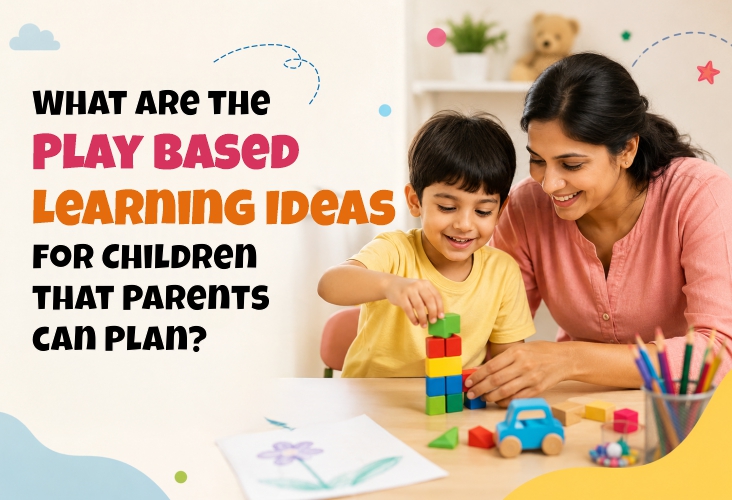
Yes! Playing with children helps parents to develop strong connection or bond and turn ordinary play session into a fun learning experience.
3. How do I know if my child is enjoying a learning activity?
Engage with your child, look for signs they drop such as asking frequent questions, trying something new and creating their own games. Children often show their interest through actions rather than words.
4. How do educational toys build cognitive development?
Toys such as matching cards, memory games and sequencing activities encourage little learners to recognise patterns, observe, solve problems and observe.