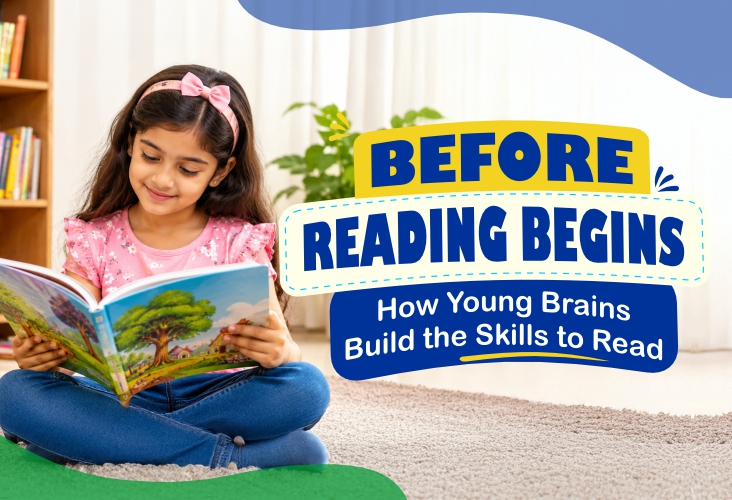
Reading is considered one of the most magical milestones of childhood.
In early childhood, a child cannot read a single word, but their brain is already in the process of learning the skills that ultimately make reading possible.
A child’s reading journey begins with little moments in a day, such as singing a rhyme, naming a favourite toy, matching different pictures, spotting a pattern, asking endless questions, or listening closely to different words.
Each day, every word they learn, every sound children hear, and every connection they build gives the developing brain another piece of the puzzle.
For example, a child who claps along to “Twinkle, Twinkle” is noticing patterns and rhythm. A child who is involved in sorting different animals into one group is learning to connect ideas and classify them. And another child, who asks, “Why does the moon follow us?” is using language to understand the world around them.
These moments look very ordinary in everyday childhood experiences. However, they give the brain opportunities to develop skills that later support reading.
So, what exactly is happening inside a young child’s brain before reading begins?
What Happens in the Brain Before Reading Begins?
A child’s first reading lesson can happen anywhere, such as in a classroom, on a playground, in a living room, or even during mealtime.
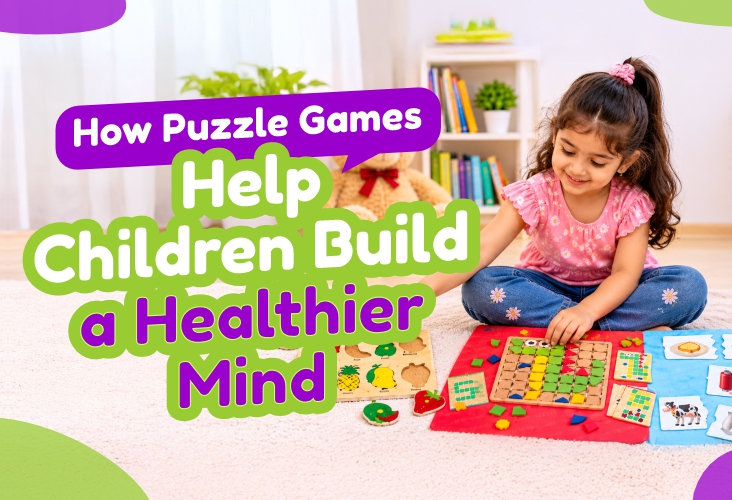
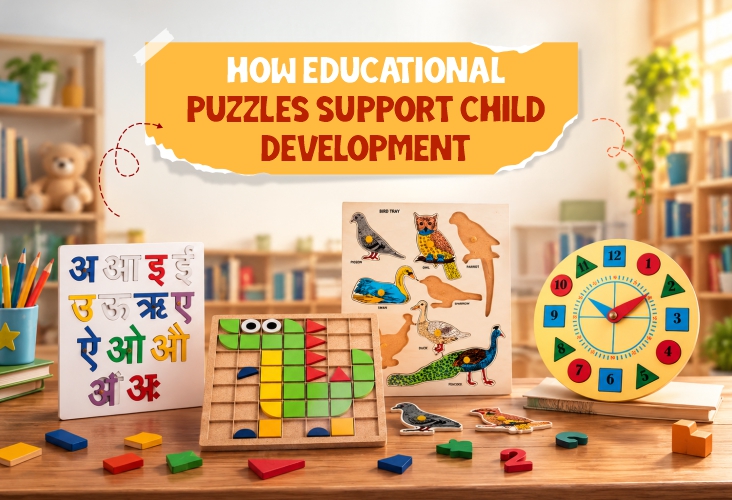
For example, a child may listen to a story and remember a character from the start. While involved in a educational puzzle game, the child rotates a piece, compares its shape, and figures out where it belongs. During a pretend-play game, children give names to different objects and create a little story around them. At another moment, they notice a familiar symbol on a stop sign or recognise their favourite book simply by its cover.
These different experiences give young brains the opportunity to work with memory, language, and connections. Through all these interactions, children effectively learn to notice details, understand relationships, recognise familiar information, and organise what they observe.
Before children can decode different words, they need to focus on developing skills that include:
Understanding and listening to language
Building vocabulary
Remembering and recognising sounds
Identifying patterns
Connecting symbols with different meanings
Understanding how spoken language works
Paying attention to details
As these abilities develop, children effectively become better at remembering, listening, recognising patterns, paying attention to sounds, and understanding words. All of these contribute to the development of reading skills.
This shows that early reading development is not a single skill. It is a collection of abilities that the young brain gradually develops and brings together.
But an interesting question is: how does the development of language become the foundation for learning to read?
How Does Early Language Development Support Reading?
Language provides children with the first tools that they need to describe and understand the world around them. Every new word they hear, understand, and use adds to their growing language knowledge, which helps them make sense of written words.
For example, in the everyday life of a child, there is a moment when they see a butterfly in the park and ask, “What is that?” The parent answers, “It is a butterfly.” The conversation can continue with different questions, including “What colour is it?” and “Where is it flying?”
In all these conversations, the child has encountered new vocabulary, listened to sentences, answered questions, connected ideas, and tied them to real experiences.
These interactions also help children understand that language can convey information, express ideas, describe actions, and tell stories. With the help of these, their vocabulary grows, and they have more language to focus on when they later encounter those words in print.
In addition, a child who understands words like “behind,” “quickly,” or “tiny” can focus more attention on understanding a sentence that contains such words while reading.
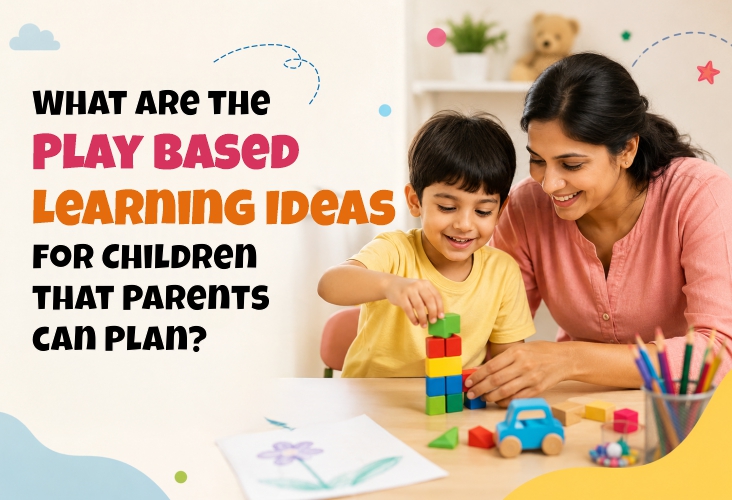
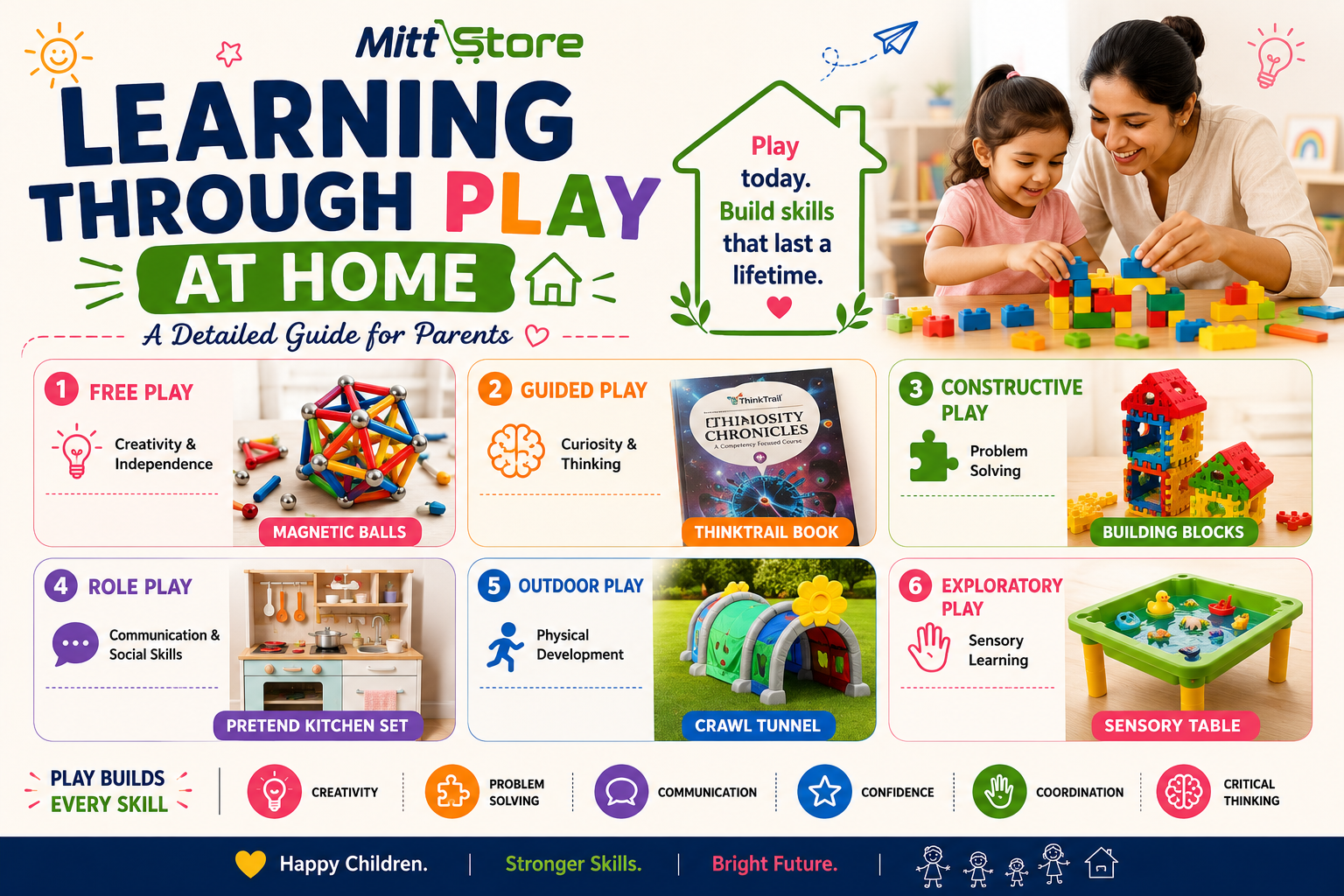
This means that play can create similar opportunities. Matching games, picture cards, pretend play, and classification activities encourage children to name different objects, group ideas, and communicate their thinking.
As children become highly familiar with words and their meanings, they start to notice something else: the sounds that make up those words. So, why is sound awareness an important step towards reading?
Why Is Sound Awareness an Important Step Towards Reading?
Phonemic awareness is a crucial foundation that gives young minds a step towards learning to read.
With growing language experience, children gradually develop an awareness of how spoken words are structured. They begin to listen for repeated sound patterns, individual sounds, and similarities between words.
Young minds become attentive to the way words are spoken and formed. They begin noticing repeated sounds, differences between words, and the smaller sound units within longer words. Activities such as sound-matching, rhymes, word games, and playful conversations encourage children to listen carefully and identify different patterns. With repeated exposure, the brain becomes more familiar with the sound structure of language, which creates an important foundation for connecting spoken words with written ones.
Consider a simple moment during play. A child is engaged in play and hears words such as “ball” and “bat” and notices that they start with a similar sound. Similarly, during a rhyming session, kids hear words that sound alike at the beginning and end and anticipate what comes next. When playing with flashcards, they focus on listening to the names of different groups and objects that share similar sounds.
These moments look like ordinary games, but the young brain is doing something much more complex. It is comparing sounds, noticing differences, and identifying similarities.
Play-based learning activities such as picture cards, sound-matching games, and word games provide young minds with opportunities to compare, connect, and listen. A few minutes of engagement in play can strengthen mental connections that effectively support reading.
And this is what makes early literacy so fascinating. The foundation of reading develops through experiences.
What Comes Together Before a Child Begins to Read?
Before a child starts reading, there are several abilities that work together. A child listening to a story is using memory and attention. A child naming objects in a picture book is building vocabulary. Another child matching two objects with similar sounds is becoming highly aware of how different words are formed. Even solving a puzzle involves observing details, recognising patterns, and making connections.
Think of all these skills as pieces of a puzzle. Language experiences help children develop sound awareness; sound awareness helps them notice how words are formed; attention helps them make sense of it all; and memory helps them hold the information. Play-based learning helps develop many of these skills together.
This is exactly why early literacy can grow through everyday experiences rather than a single activity. A story, puzzle, conversation, or playful sound or song game can add another piece to the picture.
By the time a child opens a book and reads their first word, their young brain has already been preparing for that moment in countless little ways.
Frequently Asked Questions (FAQs)
1. What does science say about how young brains learn to read?
Before children begin reading, their young brains develop several foundational skills through play, language and everyday interactions. Activities such as games, rhymes, word games, conversations, and storytelling give children opportunities to build vocabulary, notice patterns, recognise sounds, and make connections.
2. What role does sound awareness play in helping young minds learn to read?
Sound awareness plays a crucial role, as it helps children recognise and work with the sounds within different spoken words. Listening to similar sounds, playing with words, and identifying differences help young brains become familiar with the sound structure of language. This helps create an essential foundation for connecting spoken language with written words.
3. Can playing really help children learn to read?
Yes, absolutely, in many ways! Most simple games involve different skills that support early reading. Solving puzzles, matching pictures, playing sound games, and sorting objects encourage children to remember, observe, listen, and make connections while having fun.
4. Does every child develop reading skills at the same pace?
Children develop reading skills at different rates. Some become highly interested in books and letters early, while others spend more time on listening skills, building vocabulary, and developing sound awareness first.