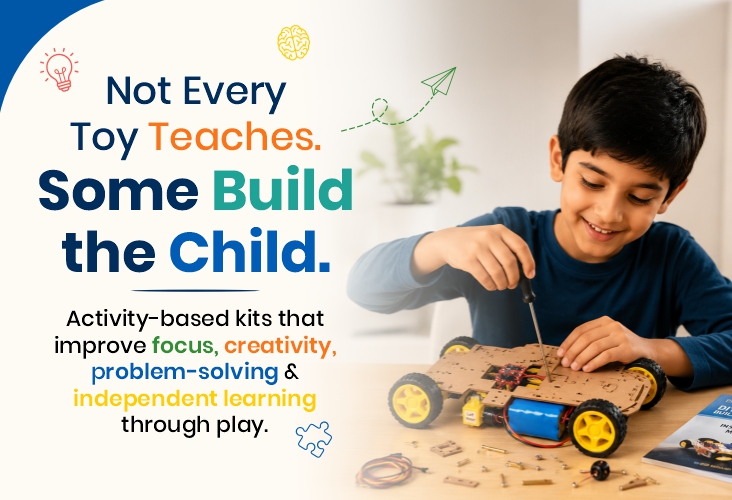
A child’s maximum attention span is around 2 to 5 minutes per year of their age. Naturally, the younger brains need frequent physical movements to keep themselves engaged.
As per CNLD Neuropsychology, the average attention of kids as per the age is
But there are a few factors that can affect these attention spans. Mainly, if kids do not get a good environment, they are hungry, tired, or there’s lack of physical activity, the subject or task is unfamiliar or uninteresting, or they have noisy environments, there’s scattered toys visually, or if they are in habit of screen time. It becomes very difficult to keep them concentrated then.
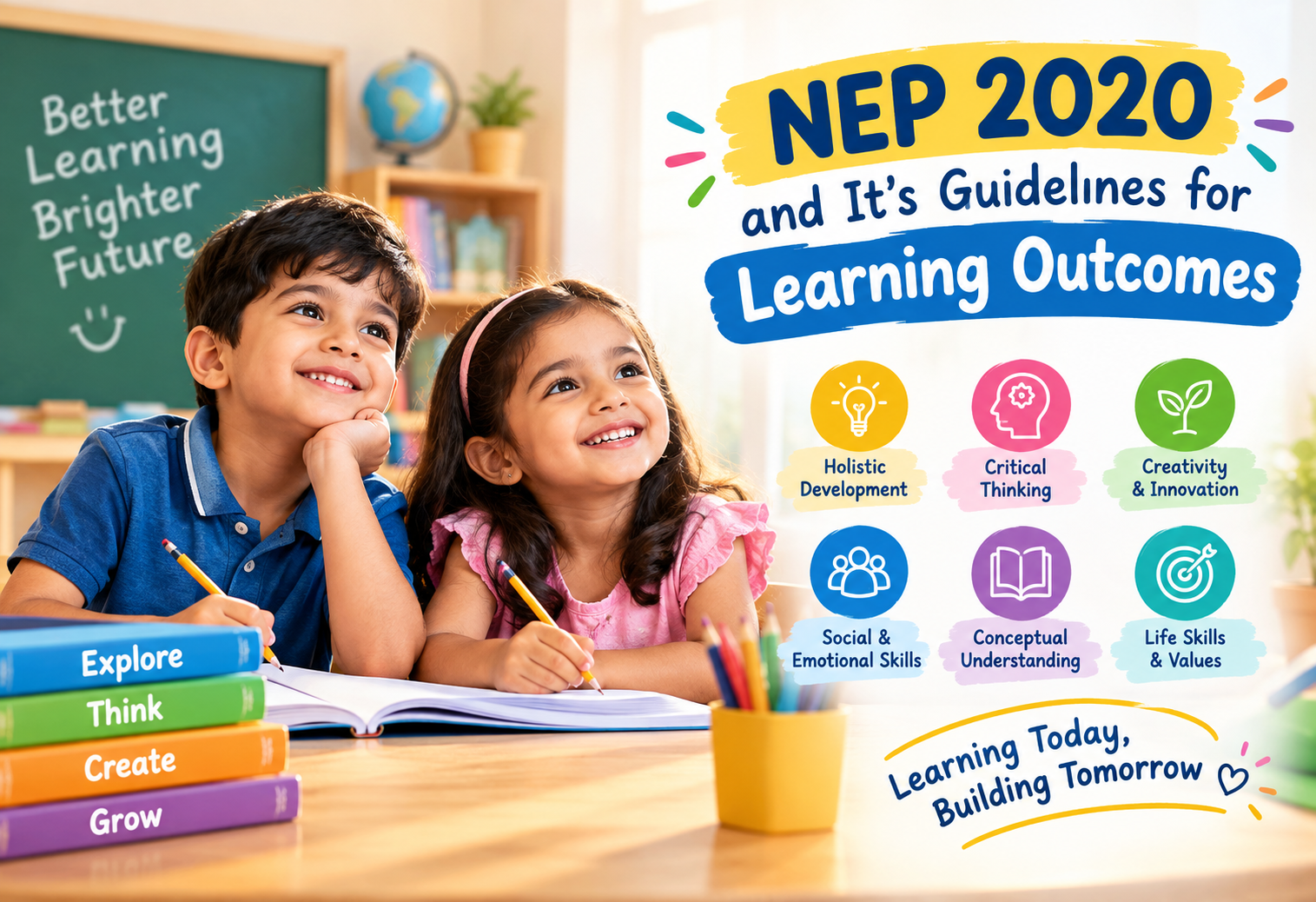
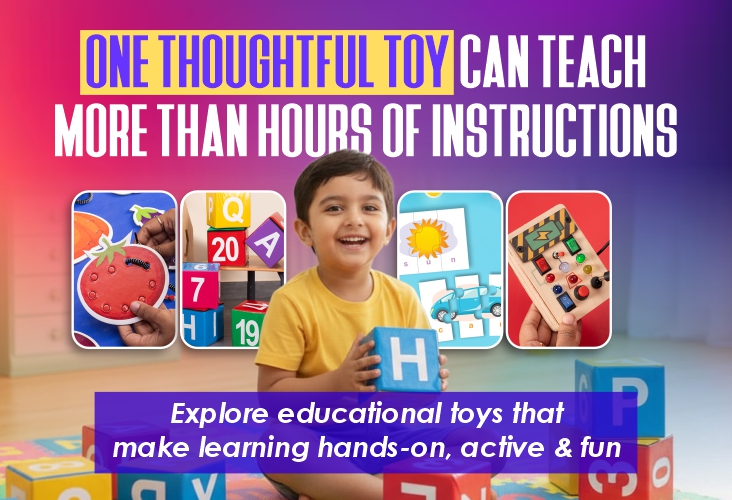
In the world full of screens, instant answers, and passive consumption, kids learn better when they actively participate. That is why experiential and activity-based learning has been prioritised by NEP 2020 currently. To build a deeper understanding of the concepts in children, so that they can retain the concepts while also knowing how to apply them practically is very important.
And not just this, activity kits help children learn by practically playing and doing those activities, again supporting active learning where they do and learn. This in turn, strengthens their hand-eye coordination, supports their understanding in counting numbers and also recognising the patterns easily. And this way they keep trying if these activities do not get solved which improves their patience and resilience in figuring out and fixing the mistakes of not getting the tasks finished.
So the level of imagination and curiosity in a child enhances making them stay conscious and aware in the later stages of life too.
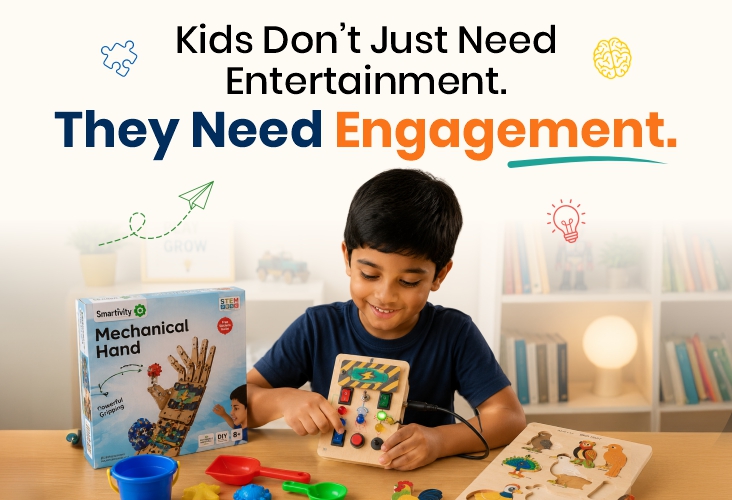
This is why, in this blog, we have mentioned all the activity based kits for kids that every child should play with at least once.
When kids are given kits where they have to “Do-It-Yourself”, the first thing that is tested is curiosity, creativity, and confidence. Which ultimately makes them ready to do things independently. There are kits that require cutting, gluing, threading, coloring, and assembling things, which sharpens their hand control and the coordination between their hands and eyes.
These DIY Montessori toys become skill building plays where kids have to figure out steps, fix any mistakes they might be making, and take responsibility for completing the project on their own. Their ability to focus and be patient also improves as they have to follow instructions of those kits, wait for things to assemble or sometimes maybe multi-task small things.
You can shop the DIY Activity Based Kits for Kids here:
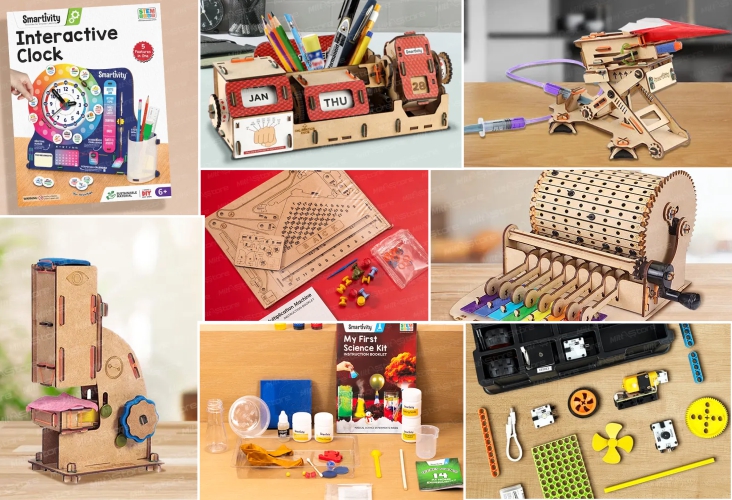
Game packages that combine science, technology, engineering, art and maths, and bring it into hands-on learning are clear must haves for your child. When children try different ideas, look through different materials, brainstorm different ways of reaching the solution, where is the space to just memorize concepts? And when you start this in early development, their brain gets wired into thinking first in curiosity style.
Many STEAM activities require kids to build the toys as per the instructions, experiment with the given resources and also sort out any troubleshooting issues. This builds problem-solving skills in them while also training their flexible thinking pattern.
Shop the STEAM Educational and Learning Toys for Kids here:
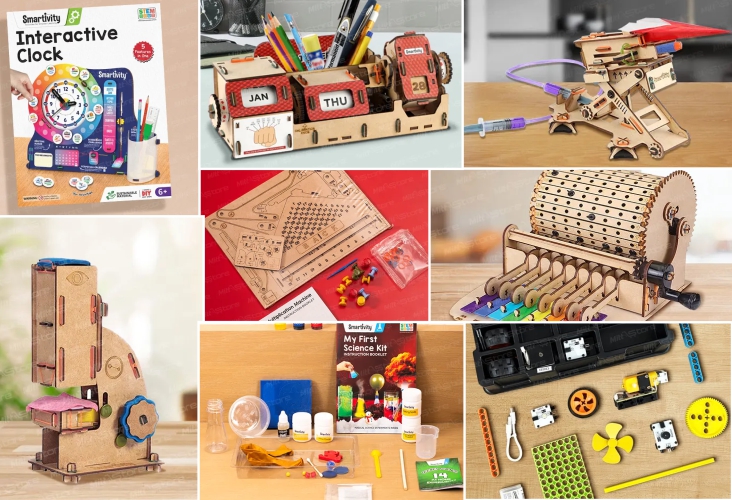
Senses are said to be one of the most important aspects of human interaction. If senses can be strongly perceived then kids are able to grasp things early and it is beneficial in many ways in different situations of life. So sensory activity kits make them test their senses and enhance the ability of senses to work. The play is mainly of visuals like colors, patterns, shapes, of audio like musical, of feeling like clay, colored rice, etc.
Baby sensory toys mostly enhance the touch, the visual processing, grip control, exploring of new ideas, focus, and regulation of emotions. The sensory toys for kids are one of the must haves, especially for the toddlers and preschoolers.
You can customise a sensory activity kit for your kid from here:
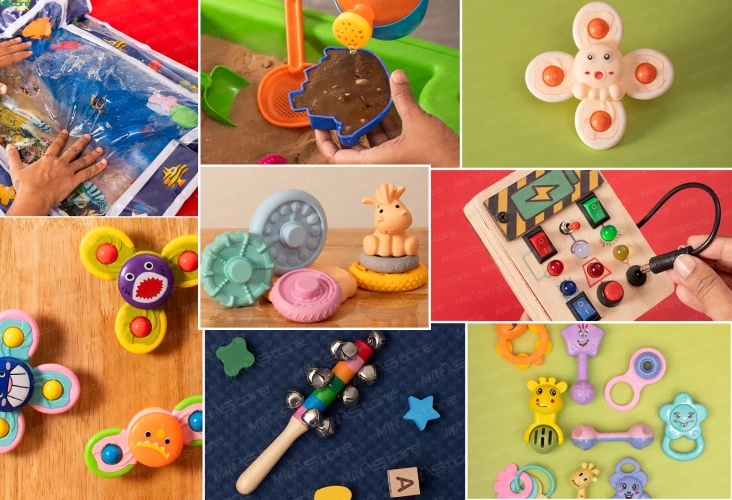
Montessori is an educational approach which is child-centered and promotes hands-on learning and collaborative play. This word is a surname of Dr. Maria Montessori, the Italian physician and educator, who created this method in the early 1900s. She started it in her first school Casa dei Bambini, which grew popular later as “Montessori Method”.
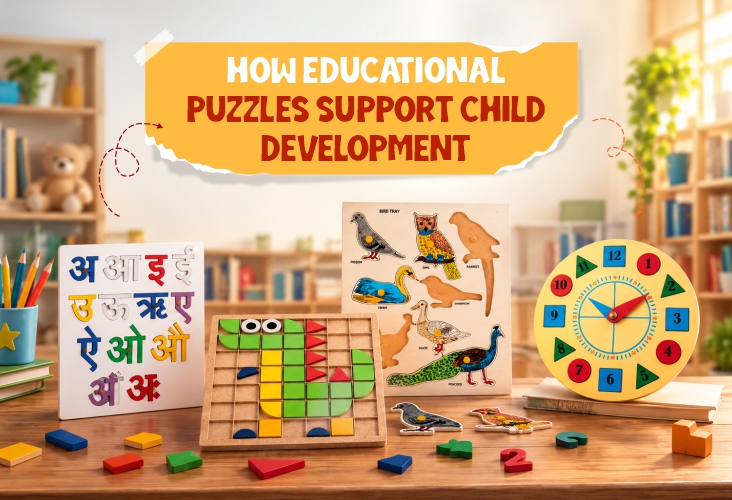
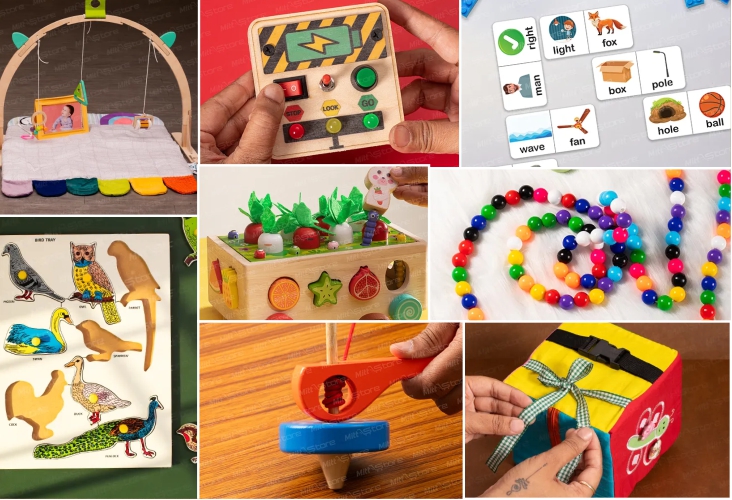
So Montessori toys are designed to keep it independent, with hands-on learning methods that help develop concentration in children. These toys have activities like pouring, sorting, threading, puzzles, dressing frames, and sensory work. There are button sorting, bead threading, shape puzzles, pouring and scooping tools, practical-life toys like mini brooms or chopping boards, sandpaper letters, number rods, and sensorial materials such as texture or color-based tasks.
Let your child make their own Montessori Activity set:
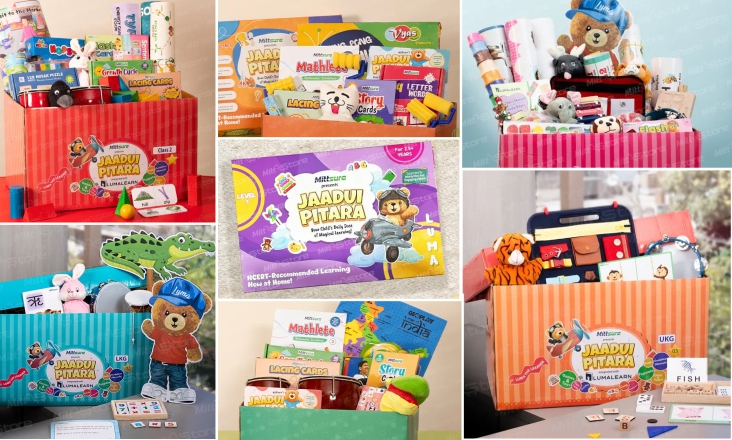
It is a play based learning kit for children in the foundational stage, and is designed in a way that it aligns with the ideas of NEP 2020 and NCF. It is one of the must have activity based kits for kids from 2 years to 5 years. It is a curated set of toys, puzzles, posters, flashcards, story books, worksheets, and teacher support material.
It aims to support early literacy, numeracy, language development, creativity, and conceptual understanding. And all of this comes from learning through play. It gives schools and families a ready-to-use, structured foundational learning tool that fits play-based pedagogy.
You can get the Jaadui Pitara for your kid as per their class here:
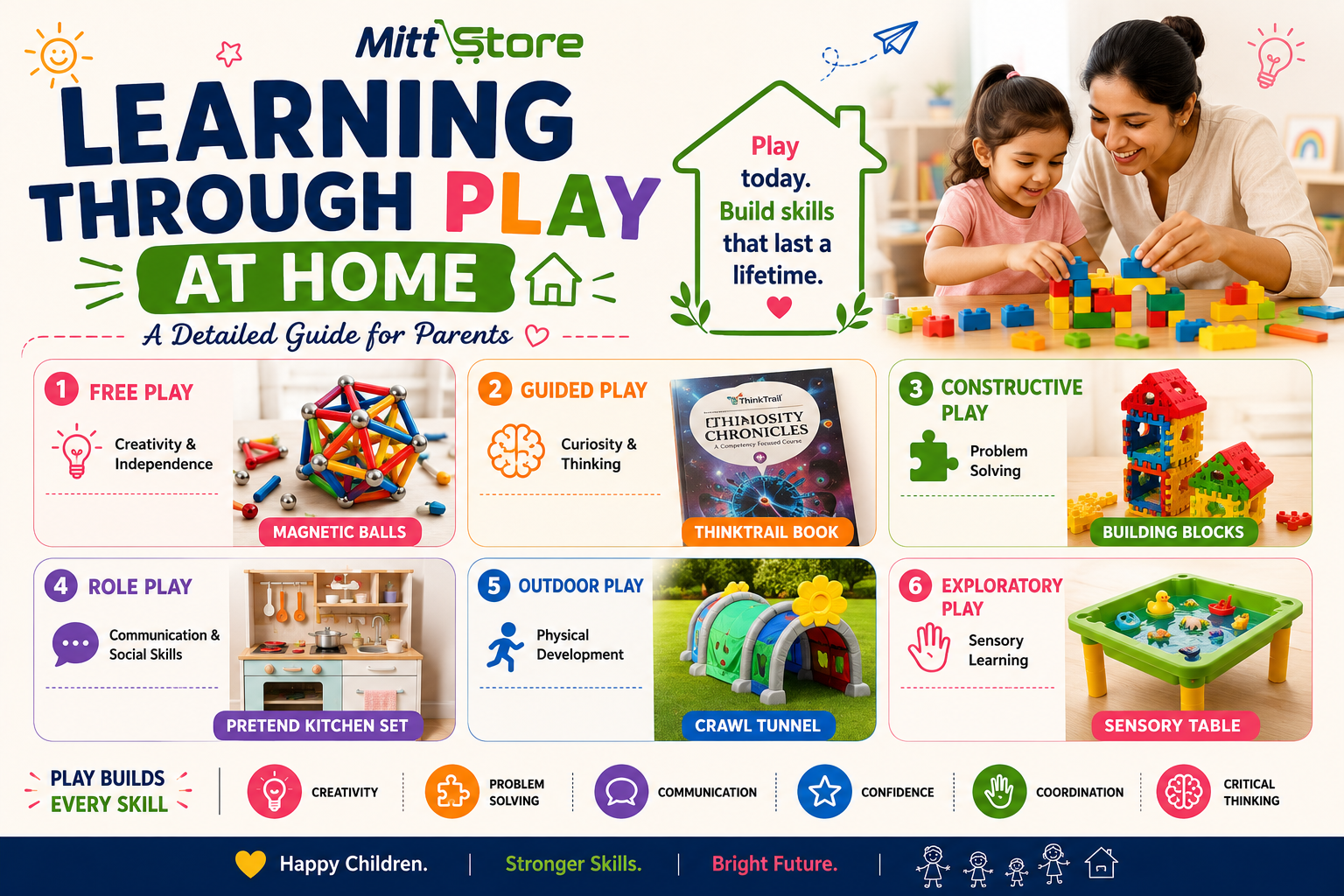
The crux is that the activity kits for kids are not the ones that keep kids busy. It should be ones that keep them curious, build their thinking capacity, improve their focus, strengthen their creativity, and help them build their skills naturally.
The activity based kits are with which students are able to actively engage with the toys through physical interaction and practical application. Kids directly experience and experiment with the toys instead of listening to the lectures passively.
When kids experience and experiment with the toys around, they improve kids’ ability to focus, enhance their creativity, sharpen their abilities that require voluntary control over the voluntary muscles that require them to perform physical tasks.
Parents should start activity-based learning toys from as early as when they are infants. A child’s brain reaches 90% of its adult size and weight by age 5 to 6, as they get the right environments for their senses to develop.