As per the Grand View Research, the global educational toys market size was estimated at USD 54.00 billion in 2023 and is projected to reach USD 118.79 billion by 2030, growing at a CAGR of 12.0% from 2024 to 2030.
India and the broader Asia-Pacific region are highlighted as the fastest-growing zones, because the middle class families have been rising there, families have been shifting to urban cities, and parents have been putting more emphasis on shaping kids better so that they are ready to go to school.
Because of these factors the demand for kids educational toys have increased.
Governments and schools have introduced the basic concepts of coding, robotics, the logic of maths, and even experiential education with science kits at a very early stage. From pre-K onwards itself, kids’ toys align with the modern curricular trends that focuses on every child’s needs, interests, and background.
This helps kids in aligning well with CBSE/NEP-inspired activities and also shapes them better to attempt Olympiad exams and sharpen their logical and reasoning skills.
There’s also a rise in parents' learning investment. The allocation of time, money, and emotional energy that parents devote to their child’s education and skill development has significantly increased.
Especially after the school closures during COVID, the “learning-loss” anxiety has made families invest in structured play and learning toy boxes.
Today, parents do not see toys as just entertainment, rather they treat it as “skill capital” that shapes their child’s cognitive, socio-emotional, language, and creativity.
But a tough task for parents is to differentiate between toys that they say are educational and toys that actually are.
So this blog is a detailed guide on what types of educational toys exist in the market, what they build in kids, and which toys are suitable for your kids at different stages of development.
The best educational toys for kids can turn play into “active learning” that builds the brain, body, and social-emotional skills that children will need for school and life.
The first 5 years cover around 85% of a child’s brain development, and when these neural wiring are fast, well-designed toys can act as low pressure practice learning resources, for thinking, movement, language, and practice in a child’s overall development.
Here are a few key benefits of kids educational toys and games that change how kids interact with the world.
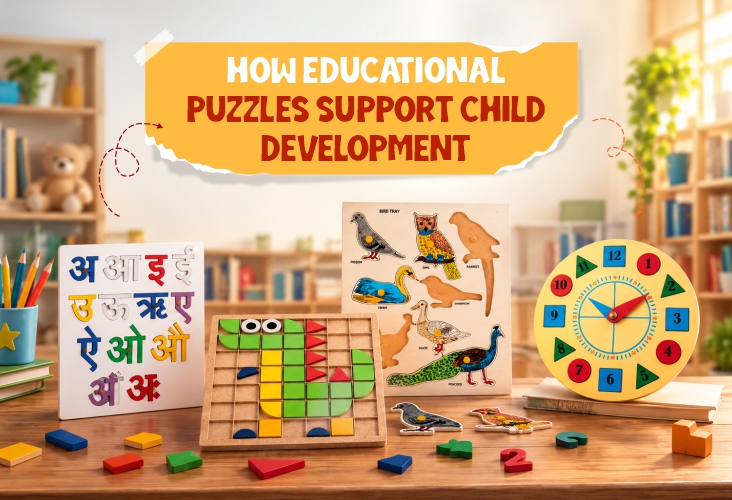
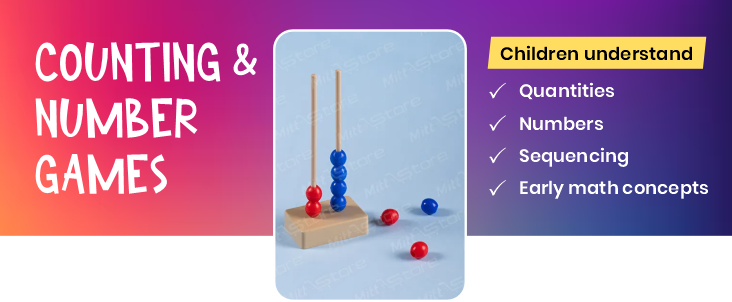
1. Kids learning toys like puzzles, number blocks, and sorting games, makes children understand different patterns and they start comparing different shapes which build their attention pace better while also boosting their memory power.
This helps them be ready for school as these skills help them in reading, maths, and even the logical thinking tasks.
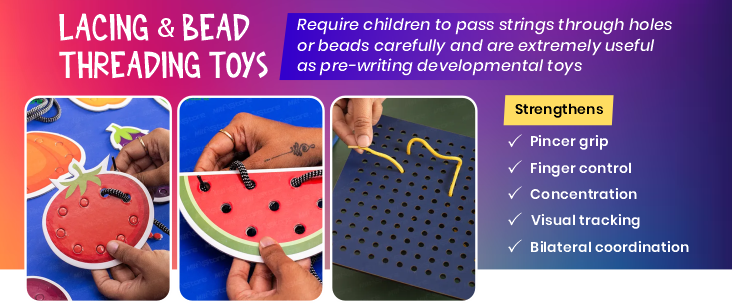
2. Educational &; Learning toys for toddlers like stacking rings, pegboards, lacing beads, and building block sets balances the fine motor skills where kids are able to coordinate their small muscles in the hands, wrists, and fingers to make precise, deliberate movements.
It also helps develop their hand-eye coordination which later helps in writing, making kids dress themselves, or even when doing daily activities like tying shoelaces, buttons, etc. And if these toys have color, texture, or sound, it helps kids understand sensory input which is quite essential in developing early motor sense.
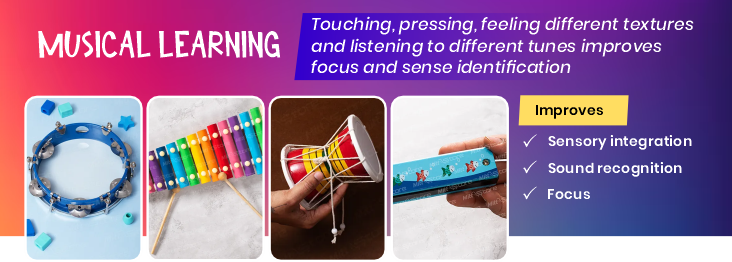
3. Educational toys for toddlers like alphabet puzzles, storybooks, talking toys, and musical instruments, helps kids in expanding their vocabulary, pronunciations, and build narrative skills (ones that help them understand, sequence, recount stories or any personal experiences). So the same toys can teach shared-language-building activity in kids.
4. Role-play toys like the dolls, kitchen sets, doctor kits, and other board games make children take turns without fights, make competition healthy, negotiate rules politely, and be empathetic to others’ feelings.
This, in turn, makes them able to monitor and manage their energy states, their emotions, their thoughts, and their behavior as to how they respond to the situations. This helps children in handling their frustration, adapt to changes that are out of their control, and focus on tasks better instead of getting impatient.
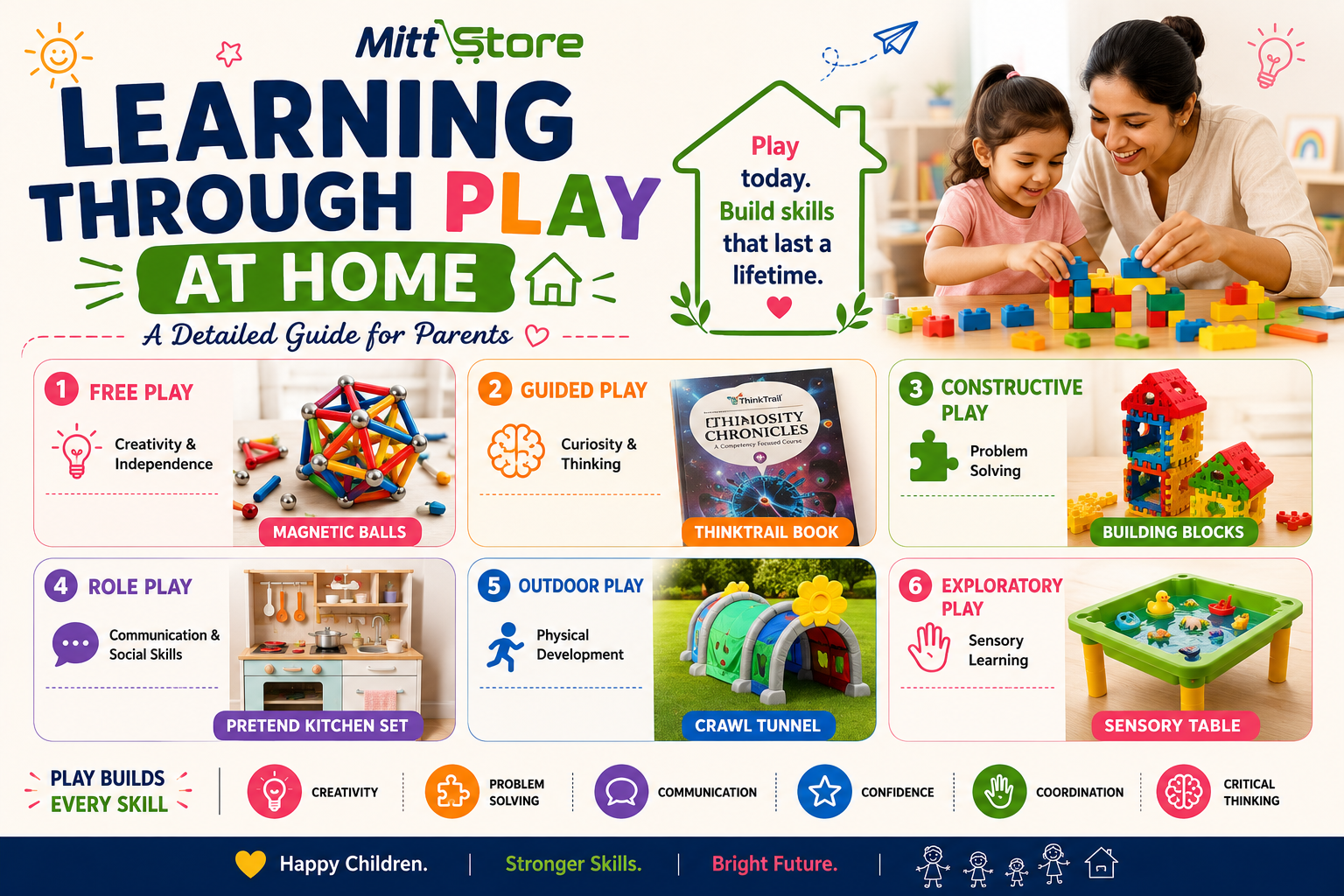
5. A few learning toys for infants and toddlers like building blocks, art kits, and clay are toys that have no fixed rules, instructions or any specific goals.
So kids get to experiment it their way, design it as per their imagination, and build it the way their ideas lead to. This builds their creativity, their power of storytelling, and even increases the flexibility of their thinking.
6. The best part of educational toys for toddlers is the confidence and attitude that is built towards learning. Once a child completes a puzzle, builds a tower, or follows the instructions in their way and brings out the final structure, they experience a feeling of achievement.
As if they have mastered the concept and now will be able to take the next step. So while these looked like fun toys for kids where children thought they were having fun not realising they were actually learning too.
The global educational toys industry has been expanding rapidly, with force drivers being parenting that focuses on education, learning that has all the latest technology involved, focus on early-years learning.
So educational & learning toys for toddlers is not just about keeping kids entertained or engaged, but they also shape the way how children think, move, observe, communicate, solve doubts, and explore the world around them. So it is important to know the types to see if you have all the options for your child.
Toys that support logical reasoning, early numeracy, and pre-reading skills are Montessori toys. They enhance the cognitive system that temporarily holds and manipulates information in the mind so that the individual is able to perform complex tasks wisely.
It also betters the mental ability to resist sudden urges, temptations, or any reactive thoughts, that helps a child understand the difference between long term goals over immediate desires. This increases the ability of the child to maintain their effort and focus on a goal-directed activity, even if there are obstacles, difficulties, or distractions.
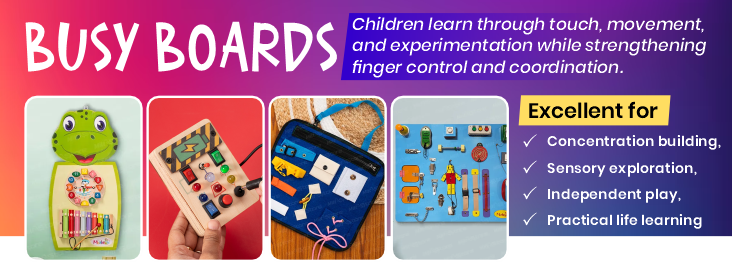
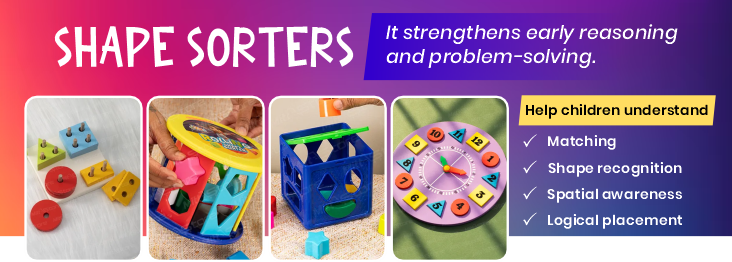
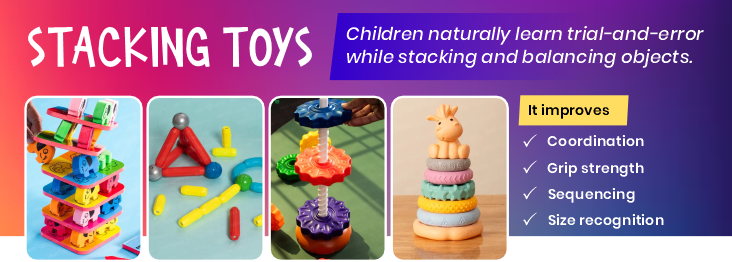
Toys that stimulate one or more of a child's senses whether touch, sight, sound, movement, smell, and sometimes taste are called baby sensory toys. And when there’s good sensory development it supports in the shaping of a healthy brain and also in making body growth better.
It helps kids understand their sensitivity to light, sound, texture, and movement. This will help them calm anxiety and restlessness in the long run.
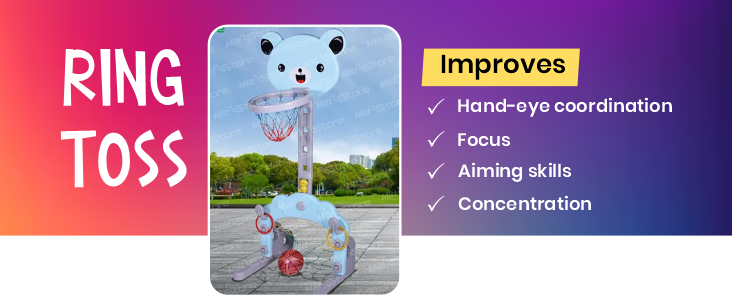
For a “whole child” growth package, the best option is Indoor & Outdoor Games. Planned indoor games sharpen thinking and social skills while giving kids a break from screens. Today, a lot of study is also done digitally. So if kids are given interesting indoor games, they will find these toys interesting and might not sit with screens for entertainment too. Similarly, outdoor games build body, stamina, and teamwork. So for early years, and school going kids, a balanced mix of both would be a great option.
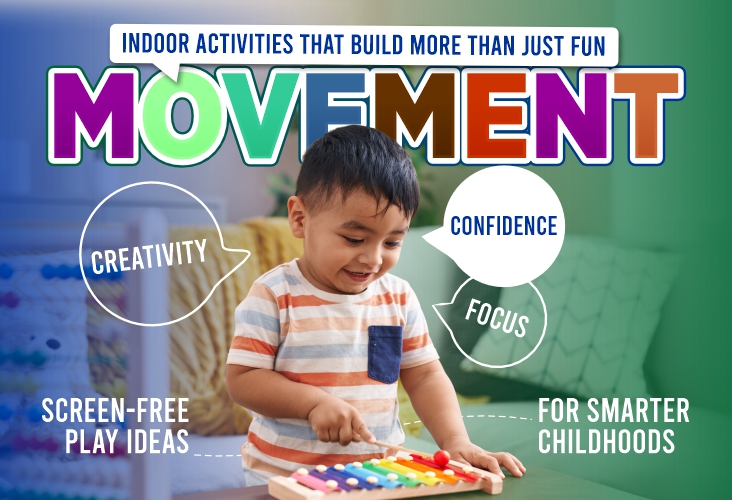
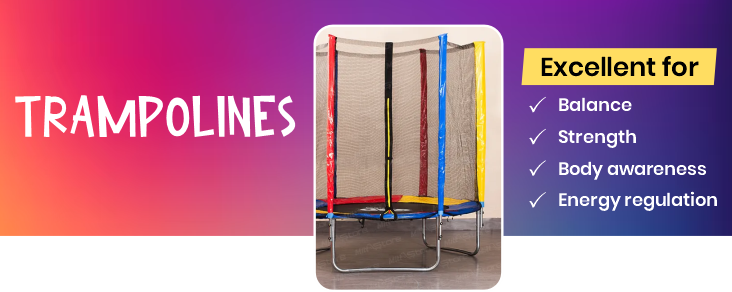
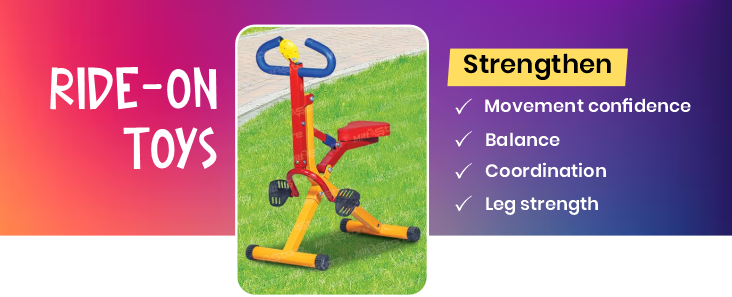
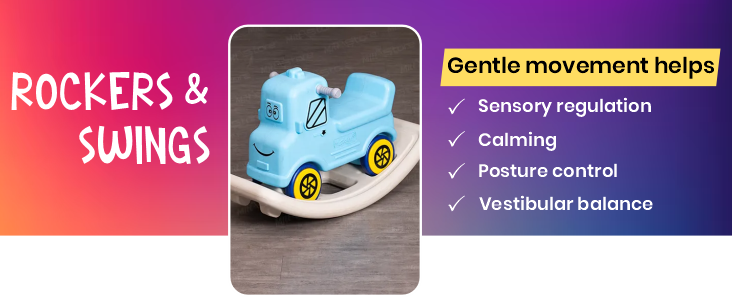
Educational development is incomplete without movement.
Improves: gross motor skills, balance, body control, reflexes, confidence, focus
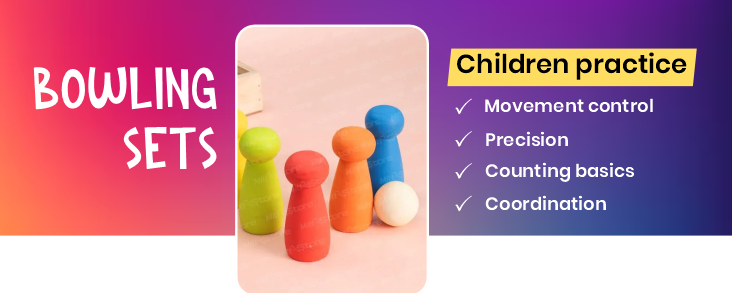
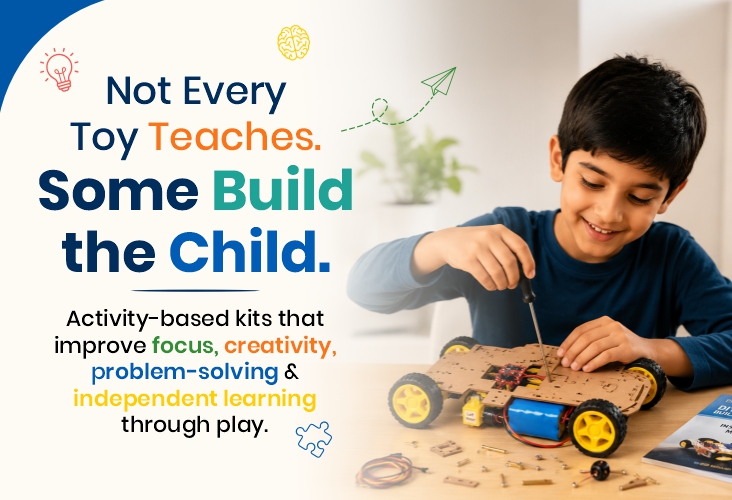
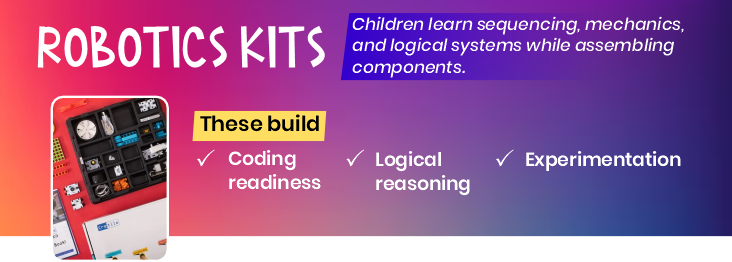
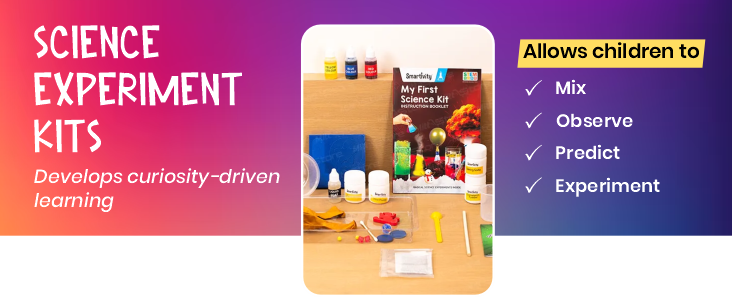
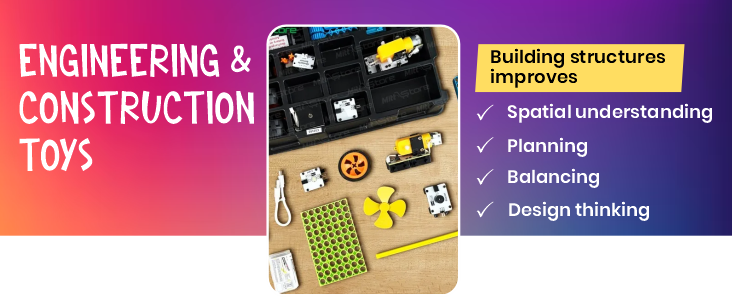
What simply look like toys kids can play with are actually experiences that young minds get to explore. By actually taking the basics of robotics, coding, machines, etc, in their hands, and seeing how robots are built, how musical instruments are invented, or how engineering projects can be innovated. If you start in early childhood (roughly 3-10years), kids learn it easier and grab things faster at the later stage too.
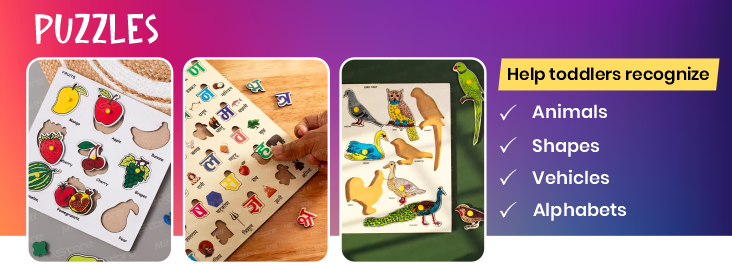
Early learning toys like puzzles, flashcards, charts, etc., help kids understand shapes, how different patterns work, and are great brain development toys. So in the early years, when the brain is wiring up memory, attention, and logical-reasoning, these toys can help kids excel in “thinking through” challenges.
All toys that help in developing skills in your child like helping them solve problems, build their creativity, boost their curiosity, shape their language, enhance their focus through play are educational toys.
The first 6 years shape 90% of the brain, so the more exposure to learning, the merrier it is for kids to grasp things in the future.
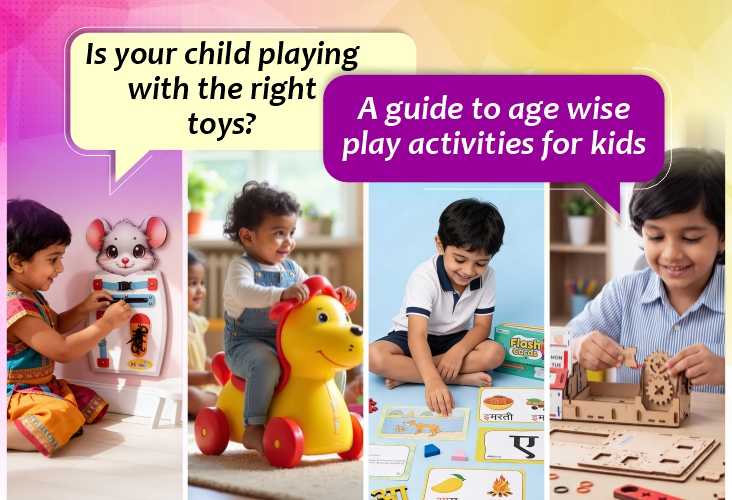
Sensory toys, stacking toys, shape sorters, busy boards, and simple puzzles are highly effective for toddlers.
They stimulate thinking, memory, movement, sensory interaction, and problem-solving, which strengthens neural connections during early childhood.
Puzzles, STEM kits, pretend play toys, indoor activity games, building blocks, and sensory toys are excellent screen-free options.
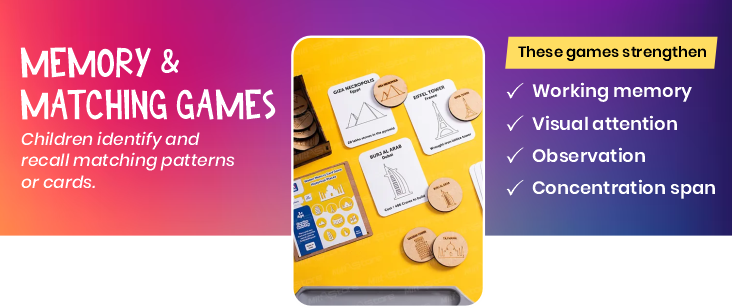
Yes, toys like puzzles, memory games, threading activities, and construction sets help improve concentration and attention span.