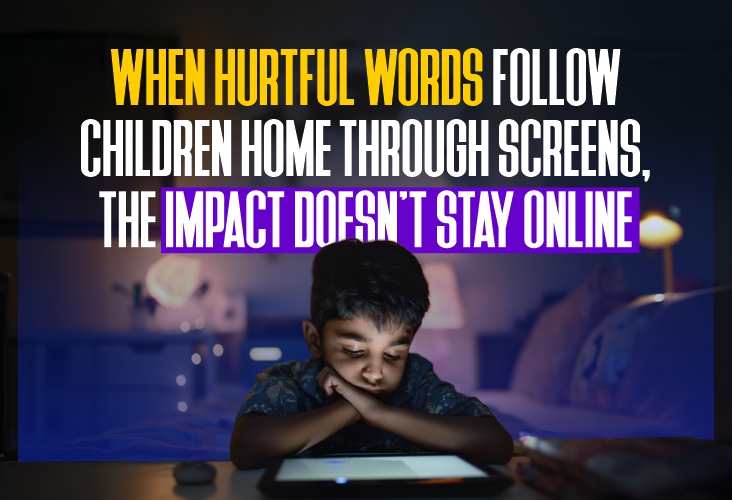
We are living in the digital era where children are playing, learning, expressing, building bonds, and shaping every sphere of their life through their digital spaces. There are school whatsapp groups, online games, social media, messaging apps, and even online classes at times, making the internet a natural part of their childhood. And even though parents have been working on calculating their screen time, monitoring them, there’s a quieter but more troubling issue which is emerging and that is cyberbullying depression.
It’s a term that has come from behaviors like spreading rumors, posting embarrassing content, or sending threats through digital devices. Cyberbullying depression refers to the emotional and psychological distress, which leads to persistent sadness, anxiety, low self esteem, isolation, and in severe cases, can also lead to suicidal thoughts. It is developed mostly when children are repeatedly targeted or harmed online.
Even the global child-wellbeing organisations like UNICEF and the World Health Organization (WHO) have repeatedly highlighted online bullying as a growing risk factor for children’s mental health, and especially during adolescence, it is seen the most as that age range is a time when identity and self esteem are still taking shape. And this damage is not just once, the hurtful comments, exclusion, rumors, shared images, all can be screenshotted, forwarded, revisited, and even relived, where the child even does not know who is watching.
There's research published in peer-reviewed journals indexed on PubMed that has found that children and adolescents who experience cyberbullying are more likely to show symptoms of depression in comparison to those who do not face online harassment.
For brands like us, which are deeply rooted in shaping safe, meaningful, and emotionally healthy childhood experiences, conversations about cyberbullying depression matter, because childhood is not just about learning skills or achieving milestones. Children should feel secure, valued, and confident, whether offline or online. This blog explores this topic through a child-centred lens, so that every parent, educator, school, and community, understands what is happening beneath the surface.
Any intentional harm carried through digital means can be said as cyberbullying. But only the mean messages, rumours, exclusion cannot be called out as bullying. Sometimes we miss the emotional reality of the cyberbullying experience. It can be:
Cyberbullying affects children differently because it attacks something deeply personal: their social identity. And for children and teens, social approval matters. So when they are rejected or ridiculed online or publicly, they feel a sense of humiliation that seems hard to escape. And their brain starts pointing this out as a real threat, triggering stress, anxiety, and emotional exhaustion.
So parents might feel that their children are safe at home, but cyberbullying can enter through a screen and even homes can feel unsafe then. Hence it is important that proper attention and care is given to them.
Bullying has always been traumatic and there is no change in that. But what has changed now is the environment in which that hurt lives, and how long children can be forced to carry it.
There have been similar emotional responses in children, regardless of where it happens. Most of the children have:
These emotional patterns are still there and have not gone but cyberbullying has just introduced more problems.
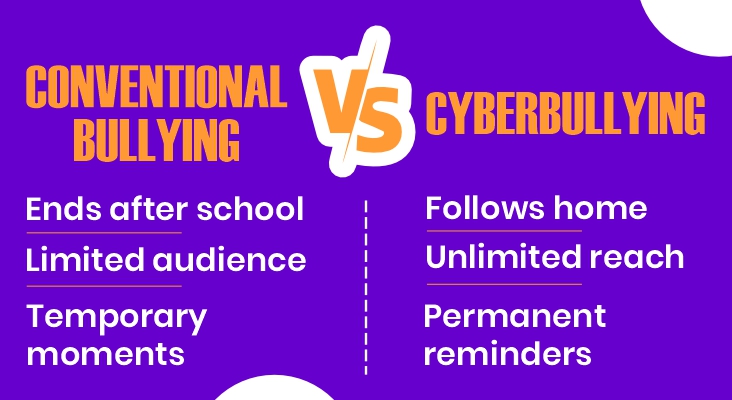
Cyberbullying has changed the scale, reach, and the permanence of the emotional harm.
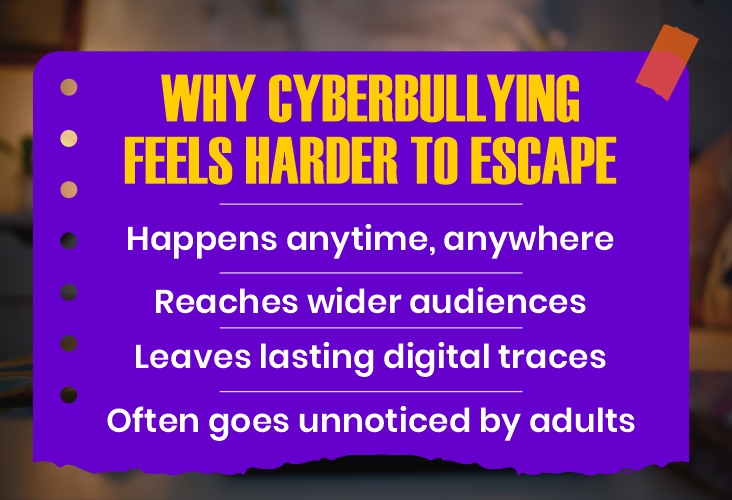
Initially if children were bullied in schools, changing it was an option and then students would heal themselves. But cyberbullying does not stay in one place. There are messages, comments, and images that can appear at any hour, and children do not get a space to come out of the situation.
A hurtful moment that once would have been witnessed by a few can now be seen by many. So even if it is a private pain, the public visibility turns it into public humiliation.
Screenshots, forwards, and saved messages make it difficult for students to come out of their problems. So even when bullying stops, the memory is accessible and students can keep going to the whole scenario.
Online, harmful behaviour often goes unchecked. Bystanders may see it but choose not to intervene, making the child feel unseen and unsupported.
| Role in Cyberbullying | What It Looks Like | Emotional & Psychological Impact | Why It Matters |
|---|---|---|---|
| Children Who Are Bullied Online | Repeated negative comments, exclusion from groups, mocking through messages, images, or posts |
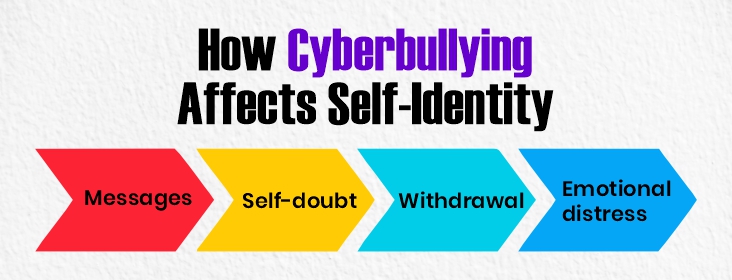
Children begin to internalise what they repeatedly hear. Over time, thoughts like “I’m not good enough,” “I don’t belong,” or “Something is wrong with me” start shaping their self-identity. Confidence erodes quietly.
Common outcomes include:
|
This damage is long-term. When self-worth is weakened early, it can affect relationships, risk-taking, and emotional resilience later in life, a key pathway to cyberbullying depression.
These are often misread as behaviour problems, but they are signals of deep emotional distress that require understanding, not dismissal. |
| Children Who Engage in Cyberbullying | Posting hurtful content, mocking peers, spreading rumours, hiding behind anonymity | Many children who bully online are coping with unresolved emotions, anger, insecurity, loneliness, or lack of control. Bullying becomes a way to feel powerful, noticed, or in control. | Accountability is essential, but without addressing the emotional roots, the behaviour often repeats. Understanding helps shift children toward empathy and healthier expression. |
| Children Who Witness Cyberbullying | Seeing harmful comments or posts without participating | Bystanders often feel fear and guilt. They may want to intervene but worry about becoming targets themselves. Over time, repeated exposure can desensitise them, making cruelty feel normal. | Silence has a cost. When children learn that harm goes unchecked, it reshapes their understanding of kindness, responsibility, and community, impacting emotional dev |
Cyberbullying may happen online, but healing always begins offline, maybe in conversations, relationships, and everyday moments of care. So if a kid is facing cyberbullying depression, instead of controlling children’s digital lives, the need of the hour is strengthening their emotional safety nets.
Role of parents are often a child’s first line of emotional protection. What matters most is not having all the answers, but creating a space where questions, fears, and experiences can be shared without judgment. Because when your kids know that they won’t be blamed, dismissed, or immediately “fixed,” they are far more likely to speak up. So form simple habits, like listening to them fully, acknowledging their feelings, and staying calm when things don’t go the way they should. Even saying, “I’m glad you told me,” can reduce the sense of isolation a child may be carrying.
And not just listening to what they’re saying. What is also important is noticing what children don’t say. Any kind of sudden withdrawal, irritability or loss of interest in things they one enjoyed can be alarming.

Schools are every child’s second home. So how schools respond to cyberbullying sends a powerful message about what to be tolerated and what to be not. Children can be taught digital responsibility, emotional literacy, and empathy from an early age, helping them understand not to use bad words, and also not to tolerate any.
Children don’t just need rules about reducing screen time or online behaviour. They need guidance. Knowing how to block or report abuse, set boundaries, and step away from harmful digital spaces gives them an understanding of how to avoid cyberbullying depression.
A kinder digital world doesn’t begin with apps, filters, or algorithms. It begins with the values children absorb from the adults around them.
Empathy, accountability, and respect must be modelled, practiced, and reinforced at home, in classrooms, and in everyday interactions. When children see these values lived consistently, they carry them into their online spaces too.
Preventing cyberbullying depression is a shared responsibility. And when that responsibility is met with understanding rather than fear, children learn not just how to survive online spaces, but how to navigate them with confidence and care.