Most puzzles fail for one simple reason.
Just one!
THEY ARE NOT BOUGHT WITH A PLANNED PURPOSE.
Parents choose puzzles based on:
But this way parents miss out on one important thing.
THE ACTUAL USE OF PUZZLES!
Early‑childhood studies broadly estimate that structured puzzle games for kids to boost focus and short‑term memory by roughly 20–30% inside a few weeks, depending on frequency and age group, though this is more of a research‑based range than one fixed Indian number.
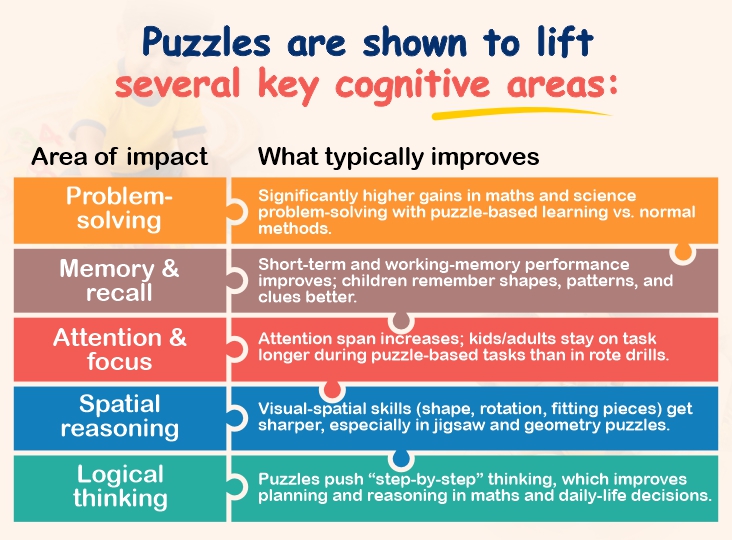
NGOs and schools that adopt play‑ and puzzle‑based learning report that more than 60–70% of children show better engagement, fewer behavioural issues, and stronger problem‑solving compared with pure‑lecture classes, though these are qualitative‑leaning statistics from field reports rather than a single rigid national percentage.
So this blog is not to tell you about how important puzzles are. This blog is a detailed guide on how parents should choose when buying puzzles for kids, especially if it is their first time. So let’s dive into How to choose your baby’s first puzzle and what actually works!
How an adult approaches a puzzle is quite different from how a baby would approach it.
When a baby sees a puzzle, they do not try to fit pieces in the shape to complete it. They see the pieces, explore the shape, test how the pieces move, understand what is happening, and accordingly repeat their actions, which builds their confidence while bringing clarity to them.
So if the puzzle does not support this kind of interaction in a child, it does not serve as a learning resource.
The right puzzle game can teach the infants essential cognitive, motor, and emotional skills. It builds confidence at an early stage, creates positive learning experiences, and encourages them to explore independently. If chosen wrong, the puzzle game can create frustration in them, reduce their interest in understanding the concepts or logic, delay engagement in learning resources.
Which is why it is important to understand that puzzles cannot be picked as per the age labels or how “educational” it looks. One also has to see how it matches the child’s current stage of development and how comfortably is the child interacting with the game.
More than the options, the designs, the categories, there’s one question that matters more than anything else.
“What is my child ready to interact with right now?”
A puzzle could be perfect and a must have for your kid, yet fail to serve the learning to your kid. That doesn’t mean it is bad. It’s just misaligned with your child’s current ability.
You see your child not engaging with the puzzle, or they simply ignore the toy, and as parents you might think that maybe it’s too early, or your kid is not ready for it.
But in most of these cases the problem is not the timing, but the knowledge of fit. So let’s understand the stages and see what kind of puzzle will be the best suitable for your child.
Mostly the “first puzzles” begin here for every kid. Because at this stage the kid is either grabbing objects clumsily, dropping things repeatedly, shifting items from one place to another, exploring everything through either touch or their mouth. So at this stage the learning is not visual or logical yet. Everything they are going to learn here is purely through physical interaction.
So at this stage, parents pick up puzzles that require precise placement, have flat pieces with too many grips, or include too many elements at once, or pick designs on the basis of thought pattern, design, or beauty.
And then, in this, if they struggle to even hold the piece, they will never reach the stage of learning from the puzzle. This might be confused with disinterest where in actual it might just be an inability to interact.
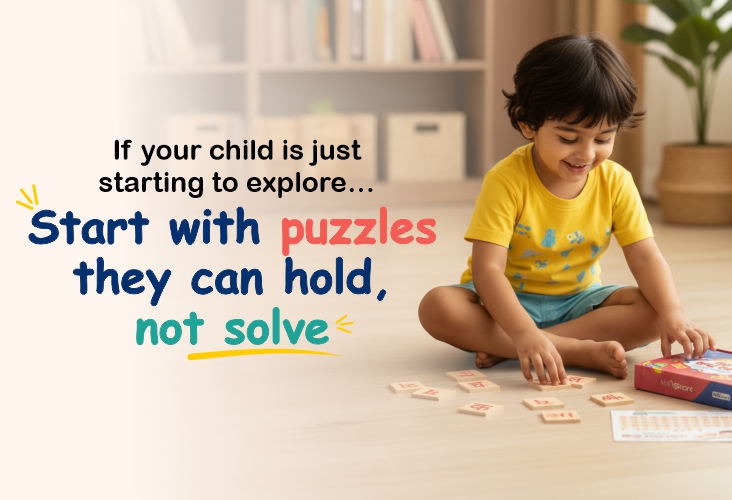
Every puzzle you think of buying should be able to answer one question. “Can the child pick this up and place it down without any struggle?”
For this answer to get completed, the puzzle should have large, chunky pieces, easy-to-grip knobs, and clear isolated objects without having any crowded visuals.
They should be able to
grasp → lift → place → repeat.
And if they keep repeating the game play, it will help build motor control, confidence, and familiarity with objects.
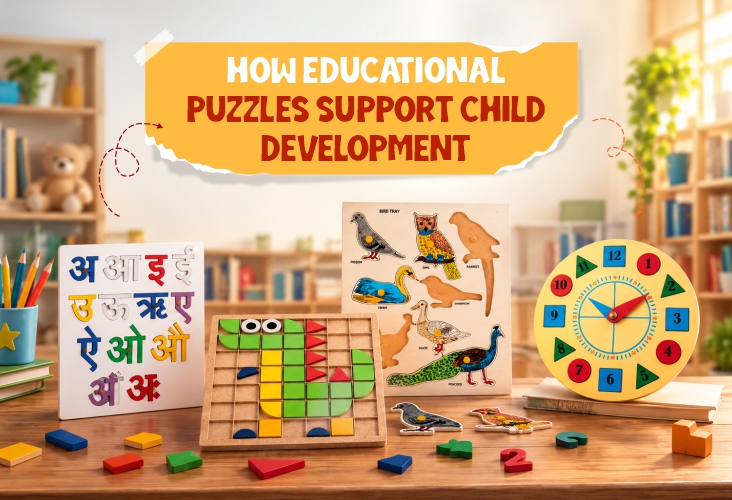
The peg puzzles and the beginner wooden puzzle for toddlers available at Mittstore are aligned with this exact phase of learning. Where the puzzles are not trying to “teach too much” but simplify the interaction of kids with toys, make their gripping of the pieces easier, and reduce the unnecessary visual overload. This way the child does not feel confused or dependent, but independently explores the games at their own pace.
This first comfort and convenience decides whether the child wants to engage again or let it be.
If your child is comfortable in interacting with the puzzles physically, then they will start observing differences between objects; notice shapes, colours and patterns; and be able to try placing things with purpose. They are able to understand why a particular piece is in the specified place only. If this is what your child needs, you should introduce them to recognition-based learning.
If you pick any puzzle for this stage, they might remain too random for the kids, might not be able to provide clear feedback, or maybe they will introduce too many variables at once. Which might end up creating confusion instead of clarity. So even if the child is trying, they might not be able to understand why it works or not works.
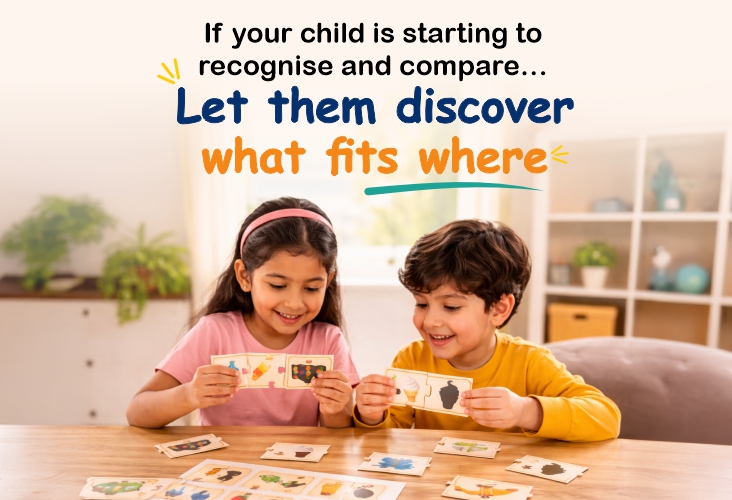
Puzzles that can clearly indicate what is the right or the wrong placement, that can guide the child visually as to where they would fit rightly, and can allow trial-and-error learning. Because the goal is for the child to understand the clarity of the right placement.
The matching puzzles and the self-correcting puzzles at Mittstore is what you would need for your child in this situation. These puzzles provide clear visual cues, allow kids to have all independent correction, and also not require any constant adult intervention.
So with this, instead of teaching your kid and making them rely on your guidelines, kids get to figure things out on their own which helps them build early logic, decision-making, and confidence in trying out things again.
If your child spends more time on one activity, tries different ways to solve something, is open to repeating actions with slight variations, then this is the stage where they are able to engage efficiently. A perfect time to build problem-solving behavior in them.
But this is not the stage to jump too fast. Do not introduce complex jigsaw puzzle games, too many pieces at once, or consciously buy some fixed-outcome puzzle activities. This might build frustration in them instead of making them feel curious with the activities they are indulging in.
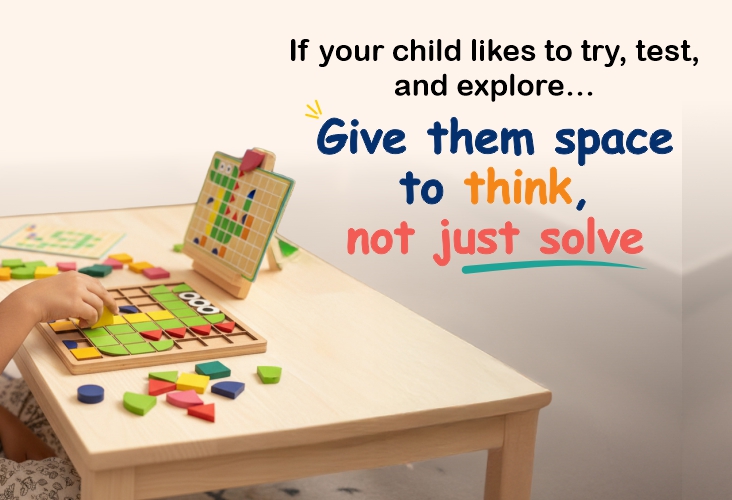
When you choose your baby’s first puzzle in this stage then the puzzle should allow flexibility, encourage them to experiment freely, and not stay fixed in one rigid outcome overall. Because you would want your child to explore the games and not just finish the puzzles in order to compete.
The pattern and mosaic puzzles available on Mittstore are designed to expand thinking without bringing any burden on the child. Because when kids play with these puzzles they understand multiple combinations that encourage creativity while introducing patterns and structures gradually.
This builds creativity, deeper engagement, while learning becomes self-driven.
If your child is curious about letters and numbers, is able to identify symbols, and interested in structures learning elements, then it’s the right time to introduce them to academics in a structured learning way.
But again, we need to take care of the fact that it should not be forced as a formal learning too quickly. As parents, you might want to give them the best of the education and might end up shifting to rote memorisation, worksheets, or some passive learning resources.
And this might reduce their engagement, curiosity, and joy in learning.
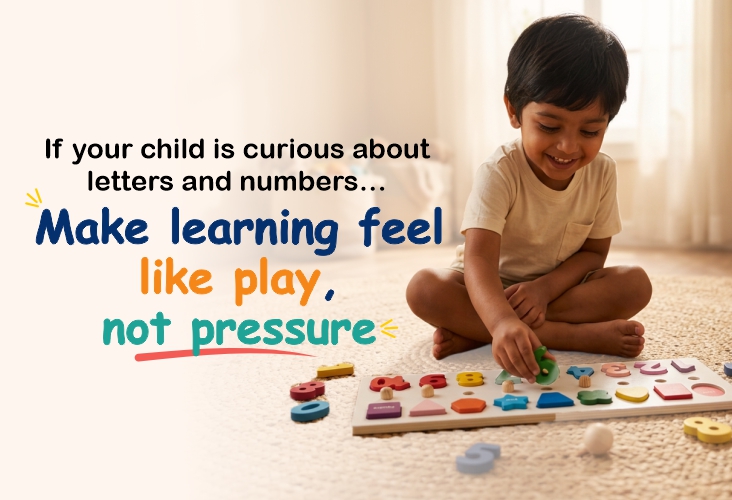
Look for puzzles that easily integrate learning into play, that makes them not just sit and observe but also interact with the pieces, and builds familiarity about patterns, shapes and designs gradually.
The word puzzle, alphabet boards, and math puzzles for kids available at Mittstore are designed to bridge this gap. With these puzzles your kids will learn literacy and numeracy by actually interacting with the pieces. They can repeatedly keep engaging with the game until the concepts become clear.
This way they learn naturally and will be helpful in the long run too.
A parent can sense the activity of their kids in the best possible way! So if you think your child is quite curious, notice environments, connect things to the real world, you can introduce them to contexts, knowledge, and guide them in exploring more questions that come in their mind.
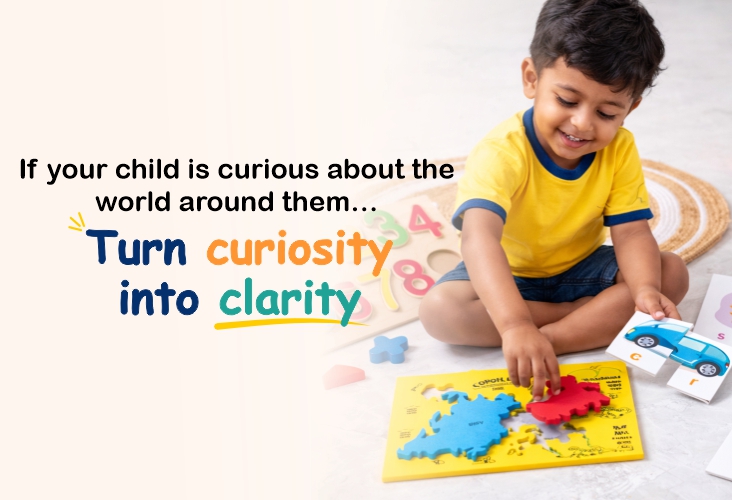
The map puzzle of India and world available at Mittstore could be a great choice. It will help you introduce geography to your child in a visual, interactive format, with spatial awareness and also having some real-world knowledge.
This way the puzzles you introduce to your kids bring them world-based understanding to your kids, shaping your young minds better.
So now it might have become clear that the best first puzzle is not the one that teaches your kids the most. It is one with which your child should engage independently, enjoy the game rather than completing the puzzle with your help, and wishes to keep coming back to it.
Because at this stage, learning is built through small repeated wins. And if these wins happen early, everything that follows in their life will become easier.