A PMC article on youth mental health (November 2025) notes high anxiety/depression rates fueling suicides, yet rare public interventions or whole-school programs exist.
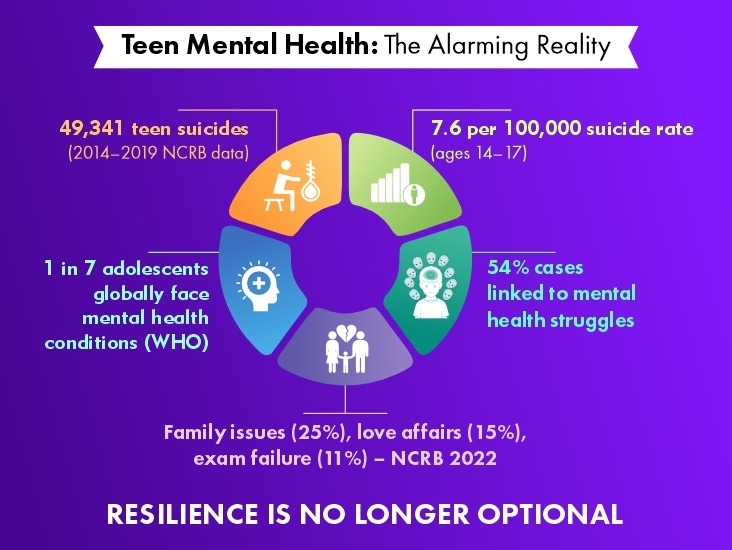
A 2025 Cambridge Global Mental Health study using 2014-2019 NCRB data reports 49,341 teen suicides (14-17 years), with rates averaging 7.6 per 100,000 population, higher among females (peaking at 9.04/100k in 2014) and rising in states like Uttarakhand and Punjab post-2016.
Projections from a 2024 PMC trajectory analysis of 26 years of NCRB reports estimate over 1.3 million child/youth suicides, with rates climbing sharply from 18.67/100k in 2015 to 23.8/100k in 2020, especially among late adolescents and females.
These are just a few data revealing the miserable condition of some teenagers who end up taking their lives. And if we think of why this is happening, here are a few reports explaining the causes:
A 2024 scoping review in PubMed identifies mental health problems (54.28%) as the leading risk factor for adolescent suicides, followed by negative/traumatic family issues (34.28%), academic stress (22.85%), violence (22.85%), and social/lifestyle factors (20%).
Another 2024 PMC trajectory analysis confirms family problems, academic failure, illness, and unemployment as top causes among children/adolescents, with academic failure and family issues hitting males hardest while love affairs affect females more.
Infact, as per NCRB 2022 data in CMHLP's December 2025 analysis, family problems (25%), love affairs (15%), and exam failure (11%) lead, though NCRB oversimplifies multicausal realities like abuse and isolation.
Being a teenager is not easy. There’s Exams. Friendships. Social media. Expectations. Identity confusion. Comparison. Rejection. Everything comes together while they are not even prepared for it. But there’s one thing that can help teens stay steady when everything seems to go wrong.
Emotional Resilience.
So let’s understand what emotional resilience in teens mean? Why is it so important right now? And how can parents actively build it instead of waiting for it to develop on its own.
The innumerable problems teenagers face makes it difficult for them to sustain the challenges. So the general understanding is reducing the hurdles so that they feel everything can be handled. And when teens are not able to take the overall load, they end up thinking that they are a failure and there is no way out. But if their capability to bear through the challenges can be increased, things can become better for them.
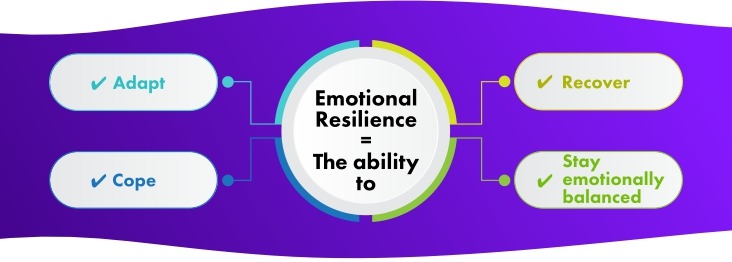
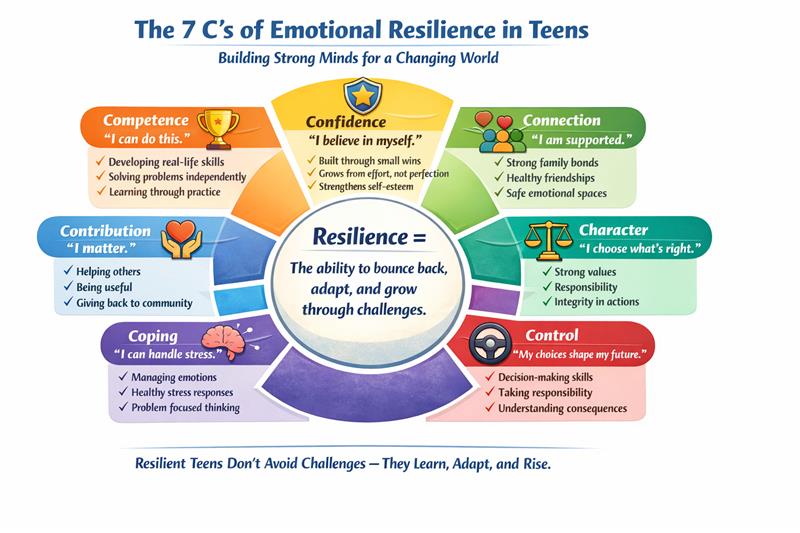
This is emotional resilience. The ability to adapt to, cope with, and recover from stressful or adverse situations while maintaining emotional balance. Individuals who are psychologically resilient can regain a healthy state quickly after coping with emotional or mental problems. Resilient individuals think positive, stay confident, and have effective emotion processing.
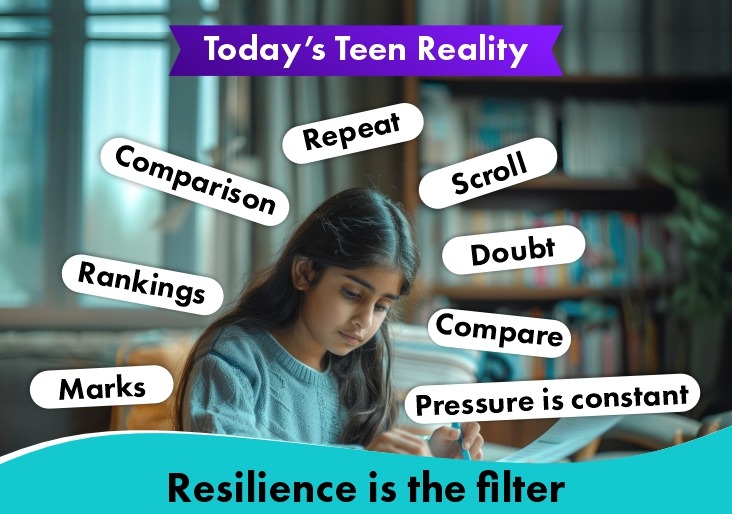
1. The academic pressure and competition is way more than there in any other time. Marks. Rankings. Olympiads. Competitive exams. Comparison. Everything matters and is counted when an individual is processing their ability. In a high-performance environment, every teen is expecting success, growth, and betterment. Failures become unacceptable making them feel as if the meaning of life is lost.
2. There is an increased culture of Social Media and Comparison. Teens have fallen into this habit since the start of their understanding of life. So a lot of them end up in a loop. Scroll. Compare. Doubt. Repeat. It just increases the insecurity in a person where other people seem happier, smarter, fitter, and more successful. So if teens are aware of being resilient, it helps them filter what they see vs reality, and to not tie their identity with likes and comments.
3. Teens go through Identity, Peer Pressure, and Emotional Changes. Adolescence is an age where an individual goes through identity formation. They are confused as to who they are, their purpose, and whether they are doing their best. On top of this there’s peer pressure and hormonal changes that makes them feel that they are vulnerable. Resilience can help them understand the difference.
According to the World Health Organisation, 1 in 7 adolescents globally experience a mental health condition. In the last decade, anxiety and depression rates among teens have significantly increased. And in many countries, stress related complaints have doubled post-pandemic.
So building emotional resilience in teens is no longer optional, it has become a necessity that every teenager must be taught. Here are a few tips parents can use:
One of the major reasons why teenagers are facing stress and are not capable of handling the challenges that come to them is the overprotection of parents. It is good to take care of your children but not to the extent that they become dependent on you when it comes to solving issues lying in front of them. Because then the emotional muscle in them never develops. And this could be the biggest resilience killer.
Studies in developmental psychology show that teens who experience manageable stress (not trauma) build stronger coping mechanisms than those shielded from all difficulty.
So stop solving every problem they face. Let them face their monsters themselves. You can be there for them if anything goes wrong when dealing with their issues. So resist the rescue parenting when any issue occurs and allow them to face their natural consequences themselves.
Many teens are not emotionally weak or unavailable but are emotionally confused. They have the strength to face their issues but not the clarity on how to. So if a teen feels that they get angry very soon, it might be their disappointment, embarrassment, or exclusion that gives them this feeling.
Neuroscience research shows that labeling emotions reduces amygdala activation (the brain’s threat center). Simply naming feelings helps regulate them.
As parents, you can check their emotional check-ins at dinner. Conversing with them helps them speak out on what is bothering them. Ask them how their day was, a good part, maybe a frustrating part of the day. When teens share their stories they get clear on what they are feeling exactly. Model emotional labeling with them rather than being dismissive about their feelings with talks like “It’s not a big deal”, “It happens with everyone”, etc. If it feels big to them, it might be. So help in processing their feelings, not suppressing them.
When teenagers are going through a tough time, they are not looking for advice that they can listen to. What they are looking for is help at the execution level. The in-depth understanding on what has to be done and someone who can make them feel that they are there throughout without judging them.
Research from cognitive behavioral therapy (CBT) shows that structured problem-solving reduces anxiety and builds self-efficacy in adolescents.
So you can probably use the 3-Question Method. Whenever you find your teen going through a problem, ask them what is the issue, what can be the three possible options, and what might happen with each option. This way they get to build their analytical thinking, consequence awareness, decision-making control.
The current times are making us live in an instant-gratification world. Where you think of eating and can get food delivered. You think of learning something and you can get instant information about the topic. You are getting bored and think of some entertainment, endless scrolling is just one tap away.
And real life? It is slow. Unpredictable. Uncomfortable. So if teens do not know how to control the frustration that arises from this gap, it can make them avoid challenges, blame others, quit quickly, and collapse under pressure.
This requires early foundational teaching of delaying rewards occasionally, limiting constant device switching, allowing them to sit with discomfort, and encouraging them to do something long-term.
If there’s one thing we know about emotional resilience, it’s this:
It doesn’t magically appear in the teenage years.
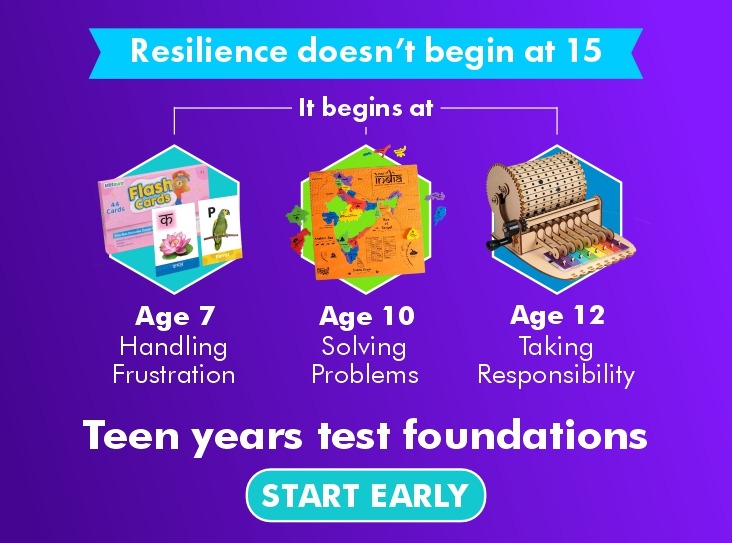
By the time a child turns 14 or 15, they are not starting from scratch. They are relying on foundations built much earlier. Foundations shaped by how they handled frustration at 8, problem-solving at 10, responsibility at 12, and emotional expression throughout childhood.
Teenage years are not the beginning.
They are the testing ground.
And preparation begins long before that.
At Mittstore you can find everything, from structured academic challenges, Olympiad-level thinking exposure, STEM-based exploration, to analytical problem-solving resources, and reasoning-driven learning materials.
When a child works through complex questions…
When they attempt higher-order thinking problems…
When they struggle with a tough concept and finally understand it…
When they prepare for competitive challenges…
They are not just studying.
They are building:
Resilience is strengthened when challenge meets support.
And while emotional conversations at home are essential, intellectual stretch and structured difficulty also play a powerful role.
Start early.
Introduce meaningful challenges.
Encourage thinking beyond textbooks.
Provide tools that demand effort and reward persistence.
Because resilient teenagers aren’t created overnight.
They are shaped. Steadily, intentionally, through the environments, conversations, and resources we give them from the very beginning.
And when we build strong foundations early, our teens don’t just survive pressure.
They rise through it.
Emotional resilience is a teen’s ability to cope with stress, recover from setbacks, and adapt to challenges without long-term emotional damage.
Resilience helps teens handle academic pressure, social challenges, emotional changes, and failures in a healthy way.
The Seven C’s are Competence, Confidence, Connection, Character, Contribution, Coping, and Control.
Parents can build resilience in the teens by encouraging them to solve problems, keeping them open to safe failures, promoting a mindset that focuses on growth, strengthening their emotional awareness, and using learning resources mindfully.
Yes. Skill-based learning kits, strategy games, and reflective tools, like those available on Mittstore, promote problem-solving, patience, confidence, and emotional control, which are key components of resilience and must be planned mindfully so that teens get to build resilience from an early start.