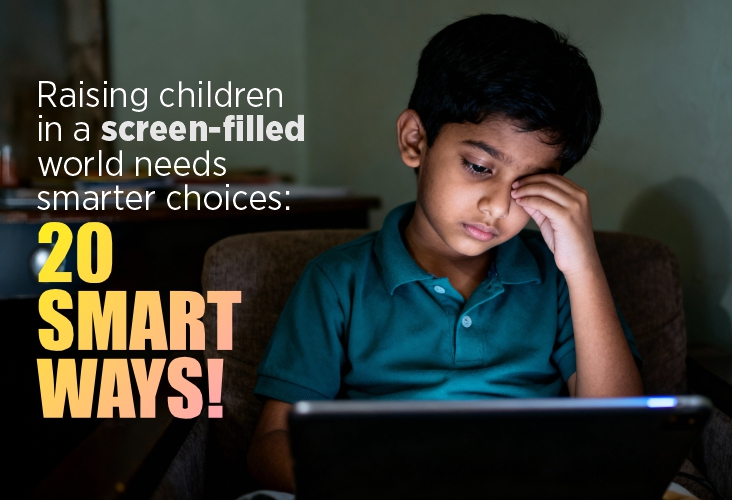
Not long ago, the maximum screen time kids used to have was a short cartoon after homework. A lot would be able to relate to the stories of - Looney Tunes, Tom and Jerry, Scooby-Doo, Dexter's Laboratory, The Powerpuff Girls, Courage the Cowardly Dog, Foster's Home for Imaginary Friends, and SpongeBob SquarePants
But today screens have somewhere become a part of a child’s day. For kids it is the fun poem, fun shorts, stories, poems, etc. Even to keep them at one place or have their dinners at one place, parents find no other options but screens for the temporary peace.
For ones going to schools, there are online classes, learning apps, entertainment, social connection, and even a quick solution for boredom. So what started as convenience has somewhere become a part of everyone’s lives and become dependent, and in most of the cases, parents do not even realise when the shift has happened.
But as per the World Health Organisation (WHO), children in the age range of 2 to 5 years should not have more than one hour of screen time per day, and children under two should ideally have none. Even the Indian Academy of Pediatrics (IAP) suggests similar recommendations that excessive screen exposure can affect attention span, sleep quality, emotional regulation, and social development in children.
Yet many children, especially in the urban cities, now exceed 3-5 hours of daily screen times. A number far beyond the suggested range and is not considered healthy at all.
And the challenge is not just the time range spent on screens. It is also what screens are quietly replacing. There’s unstructured play, hands on learning, creativity, physical movement, and even the meaningful human interaction that are also disappearing. With time, this imbalance develops irritability, reduced focus, sleep disturbances, and lower emotional resilience in children.
For parents, the question is no longer “Should we reduce screen time?”
It has become “How do we reduce it without constant conflict?”
The answer?
It cannot be banning screens altogether. Because the future is everything screens can have. So the
task is to not keep them away but help them learn how to balance everything altogether and only
benefit from the screens. The task for the educators is to create a richer, more engaging
environment where children naturally pick off-screen experiences over the on-screen ones. So given
are the top 20 smart ways, you can help kids learn all the good sides of every experience.
A parent’s in-depth guide inspired by how children actually learn, play, and grow
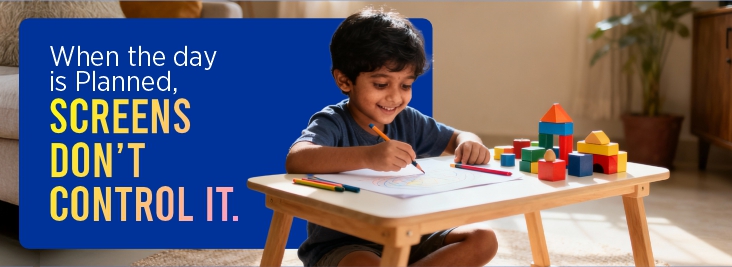
If a child has a set rhythm for the day they are less likely to be deviated by the screens. They know what activity awaits next and what all things have to be completed for the day. But it should also be interesting so that they love performing their routine instead of doing it because you have given them to. If you are out of ideas, you can visit our website and get all learning resources that your child would love experiencing. Your routine should be a mix of creative play, movement-based engagement, and quiet activities and give it to them as per their timing so that they look forward to the next activity. This way their day will already feel full and there will be lesser chances of them asking for screens.

Mornings are the time when children’s minds are least cluttered and you can get all the learning completed while promising that evening is complete play. This way they would accept your deal and you can plan their informative hours mindfully. And make sure to keep it focused learning short sessions rather than long draining activities. It can be our worksheets, literacy and numeracy resources, foundational learning materials, as they are all designed to help children sit, engage, solve and complete tasks independently. This way you also get time to sort your day while keeping them screen free.
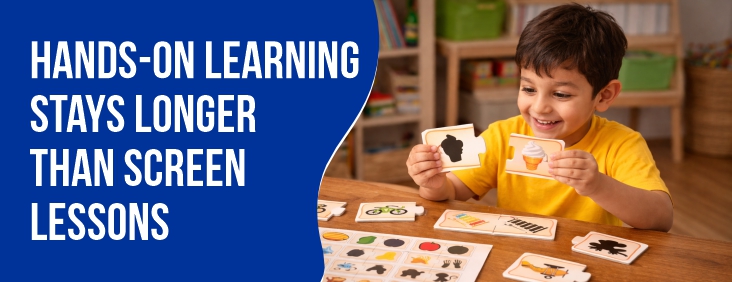
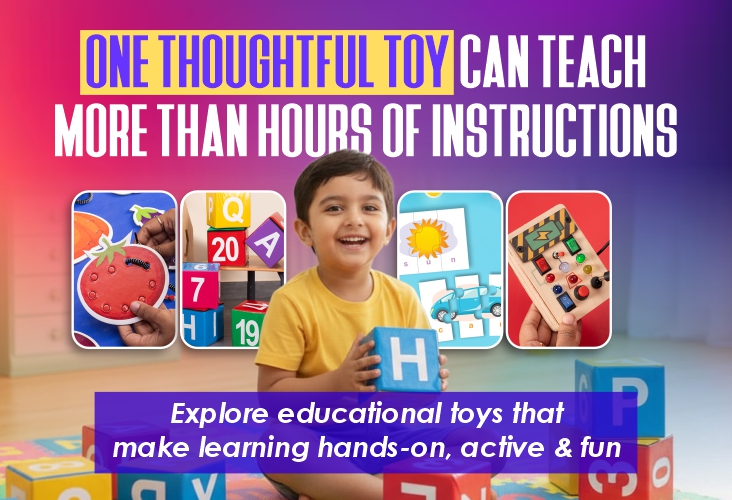
If you are one of those parents who believe that educational apps are productive and children learn online and spend time productively. Then you must think of creative educational resources that can be played offline too as children retain information far better when learning is physical. We have concept-building learning experiences all designed to be touched, arranged, corrected, and explored. This way when children move pieces, match patterns, or physically build concepts, their brains slow down and process information deeply. This reduces their desire for screen time while also adding knowledge.

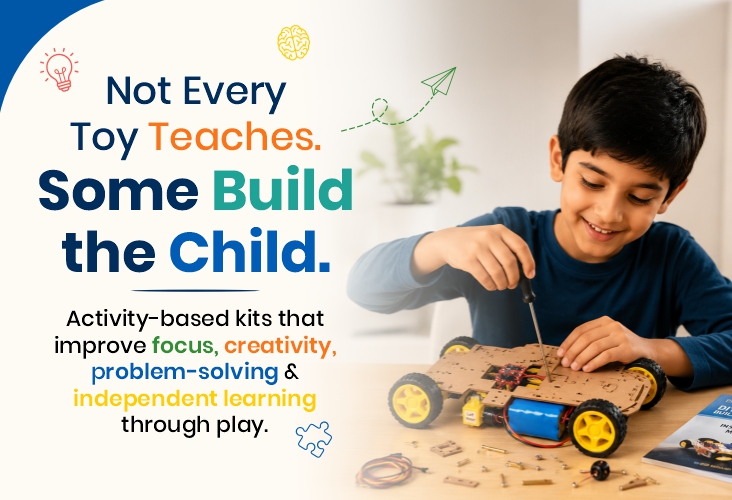
STEAM is the new essential in a child’s learning, and Mittstore approaches STEAM learning very differently from screens. Instead of showing children how things work, we allow them to discover it themselves. So with our hands-on STEAM experiences like DIY kits, construction-based activities, and logic-driven exploration, children learn to test ideas, fail safely, and try again. This kind of learning builds patience and curiosity, two qualities that excessive screen exposure often weakens.
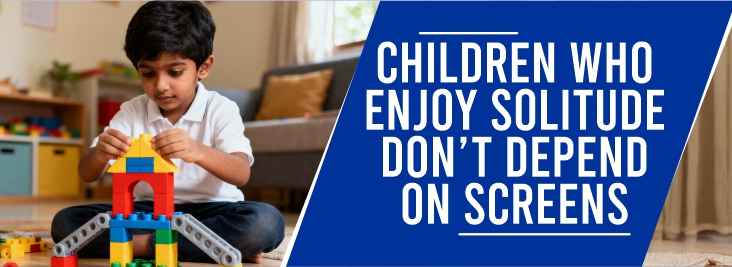
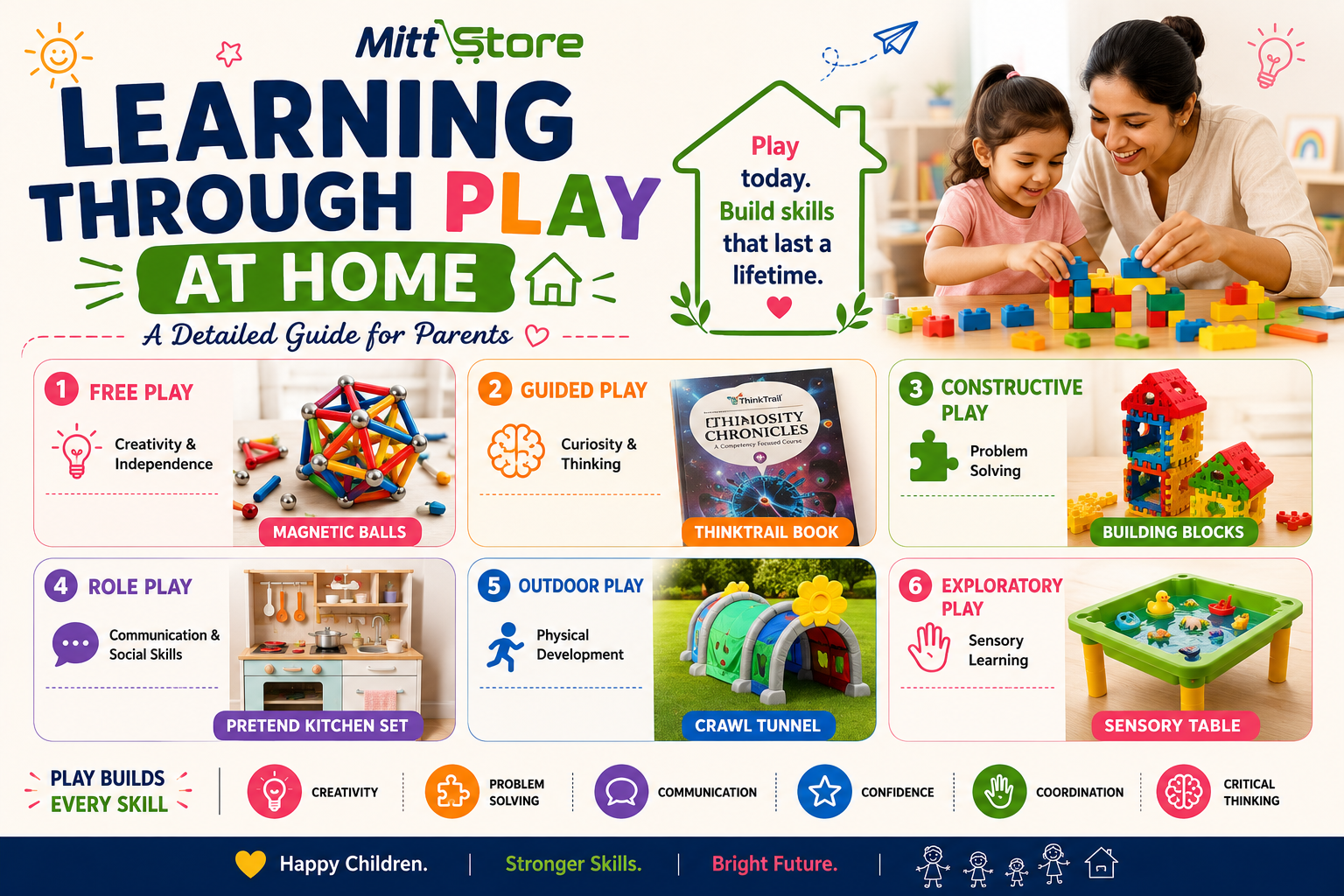
One of the most powerful ways to reduce screen time is to help children enjoy their own company. You can check out our open-ended play experiences such as building sets and creative construction activities. Here you don’t tell children what to do, they get to decide it their way. This will keep them more focused and engaged. Over time, this nurtures self-engagement, imagination, and confidence. Children who can play independently don’t need screens to fill emotional or mental gaps.

Pretending to play is not just fun, it's how children make sense of the world. The way they pretend, talk, and keep playing, reflects real-life scenarios children observe daily, could be the home routines, professions, care, responsibility, and cooperation. When children engage in these experiences, they process emotions, replay interactions, and explore social roles. This deep emotional engagement holds attention far longer than cartoons or videos ever could.
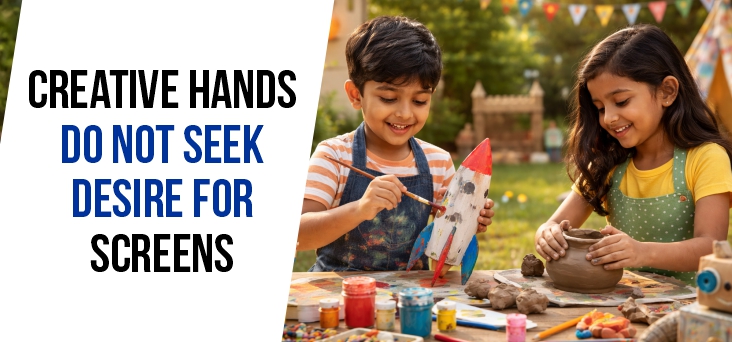
Creative play plays a crucial role in emotional regulation. We have art and craft experiences that are designed to slow children down, helping them focus, express feelings, and take pride in what they create. Parents often notice that children who engage in regular creative activity feel calmer and more settled, naturally reducing their dependence on screens for stimulation.

Children gravitate towards spaces that feel like they belong to them. And if they have exciting indoors to explore, they will find better options than spending time on screens. You can check out our child-friendly furniture, activity tables, and organised storage solutions that are designed to support independence and comfort.

Too many choices overwhelm children. Instead of displaying everything at once, rotating learning and play experiences weekly keeps curiosity fresh. So whatever learning resources you accumulate in a timeframe, keep rotating them as evolving experiences interest them more than constant clutter. The result is sustained interest without the need for adding any screen time.

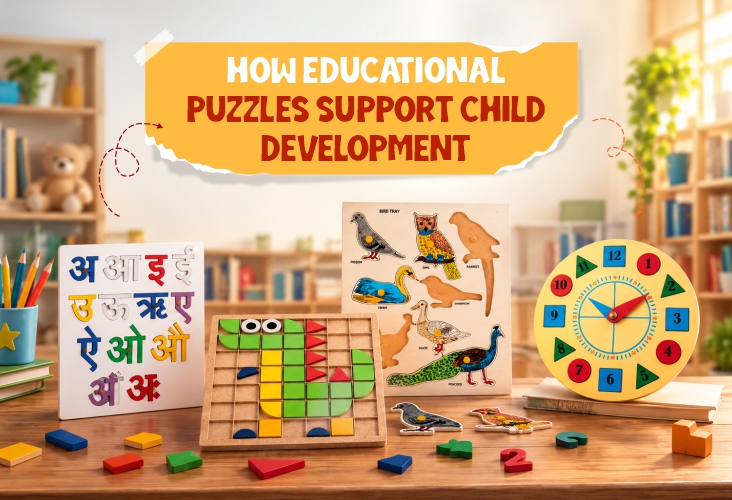
After meals, children naturally slow down. This is where quiet, calming experiences work best. We have puzzles, story-based learning aids, and low-effort thinking activities that support their emotional balance without overstimulating the brain. These moments help children recharge without falling into the habit of passive screen use.

Stories shape thinking. Our storytelling and language-development resources encourage children to imagine, narrate, and participate rather than simply watch. When children interact with stories, their vocabulary, comprehension, and confidence grow all while staying actively engaged away from screens.
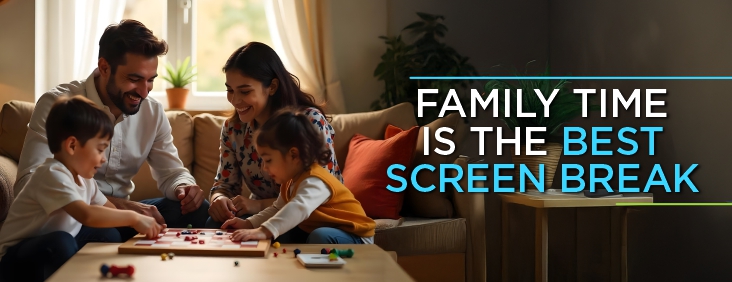
Board games serve two purposes at once: they sharpen thinking skills and strengthen family bonds. Our board and thinking games are designed to teach patience, turn-taking, and strategic thinking. These shared moments reduce screen dependence while building meaningful connections.
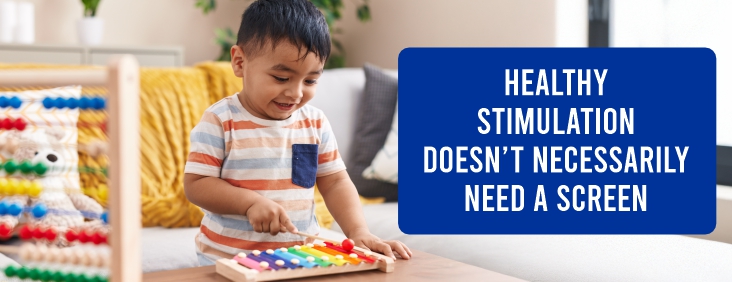
Children often turn to screens because their brains seek stimulation. Musical play experiences provide this stimulation in a healthy way. And keeping this in mind, we have specifically segregated our music-based categories to support rhythm, coordination, listening skills, and emotional expression, satisfying sensory needs without digital overload.

Movement is one of the strongest natural regulators of screen dependency. Our outdoor play experiences are designed to adapt to balconies, terraces, and gardens, making movement accessible even in urban homes. Regular outdoor play improves mood, focus, and sleep quality, all of which reduce screen cravings.
When outdoor play isn’t possible, indoor physical engagement becomes essential. Our movement-based indoor play experiences help children release energy safely and productively, preventing restlessness that often leads to excessive screen use.
Screens often replace human interaction. Group play experiences encourage cooperation, communication, and empathy. When children feel socially connected, they are less likely to retreat into screens for comfort or entertainment.
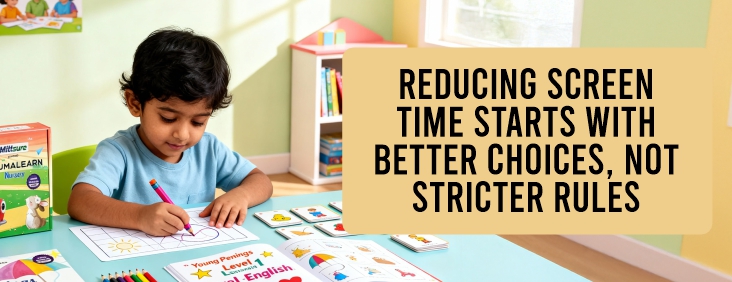
While we plan best to keep screens away, we also have to accept that screens are part of modern life. So the key is to not avoid it completely but balance it in the best possible way. Resources like LumaLearn and ThinkTrail are designed to introduce structure, time boundaries, and clear learning outcomes. This way children learn early that screens are tools to be used with intention, not endless sources of distraction.
What children watch matters far less than what they do afterward. So our learning experiences are designed to extend digital learning into physical exploration, helping children apply concepts in real life. This prevents screen time from becoming passive and addictive.
Rules work best when supported by alternatives. Replacing screens at the dining table with conversation games or quiet learning experiences in bedrooms makes boundaries feel natural rather than forced.
Night-time routines shape sleep and emotional well-being. Quiet play, storytelling, and reflection-based experiences help children wind down mentally and emotionally. When screens are removed gently at night, sleep improves and so does behaviour the next day.
Reducing screen time isn’t about strict rules or removing technology altogether. Mittstore is built around this very belief, that childhood should be intentional, balanced, and joyful. Through carefully designed learning, play, movement, and digital experiences, Mittstore supports parents in creating environments where children grow beyond screens, not away from them. Because when learning feels engaging and play feels purposeful, screen time no longer controls the day, children do.