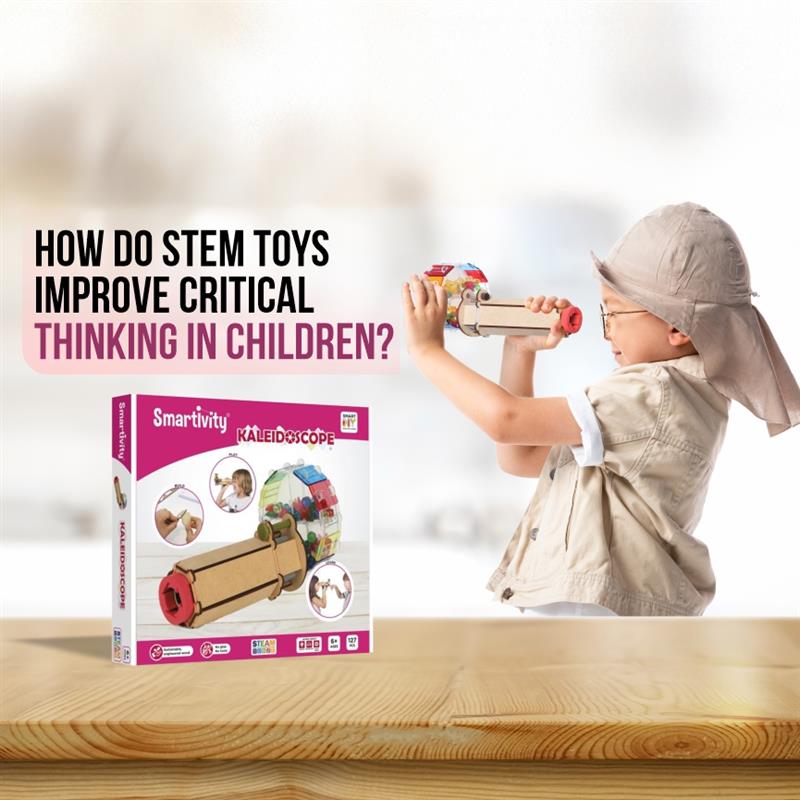
The recent evolution occurs in an environment filled with information, options, and technology, and to adapt to this environment, minds have to be ready to adapt to the changes and stay exposed to the frequent evolution of this environment. And even though the knowledge is available everywhere, the skill to implement the knowledge, think critically, reason concepts, analyse, ask the right questions, and solve problems, is what truly prepares the child for his future.
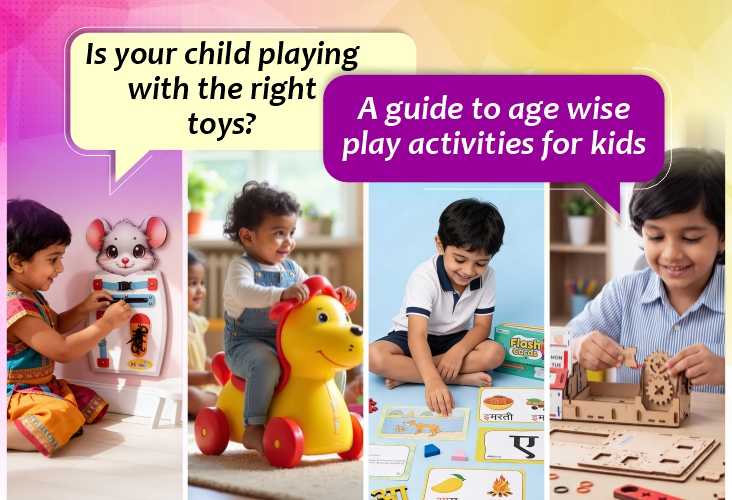
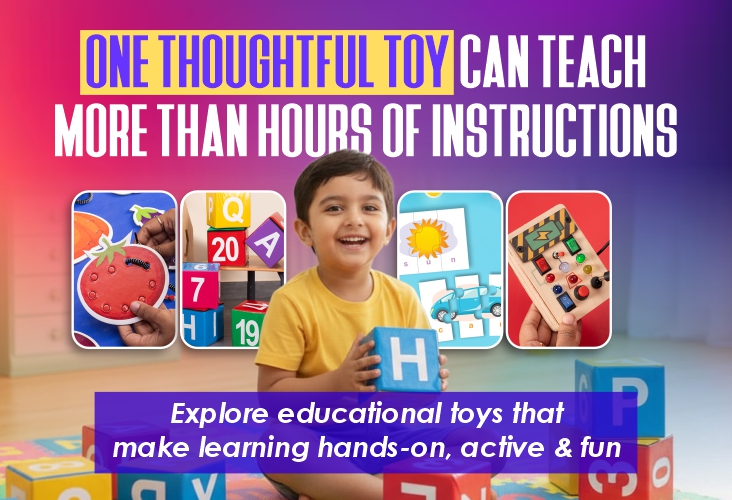
And that is why education has to evolve as per the needs of the era. STEM toys for kids are one of the essential requirements in the current times as they capture Science, Technology, Engineering, and Mathematics innovatively. With these toys, students do not just learn the concepts, but also get to understand the workings behind them. These toys have really transformed the way children perceive the world.
So having STEM Toys in your child’s play collection is a must! At Mittstore, all the thoughtfully curated STEM educational toys help children build cognitive, analytical, and problem-solving abilities from a very young age. Let’s look into more details of why STEM education improves critical thinking and how parents and schools can better maximize these advantages:
Critical thinking involves knowing every aspect of a topic or a situation. It includes:
It is not an ability learned from textbooks but rather something that develops through real-life experiences, hands-on explorations, and trial-and-error learning.
The child innately raises such questions during the early years: Why? How? What happens if…?
STEM learning toys take this curiosity and turn it into structured and meaningful learning.
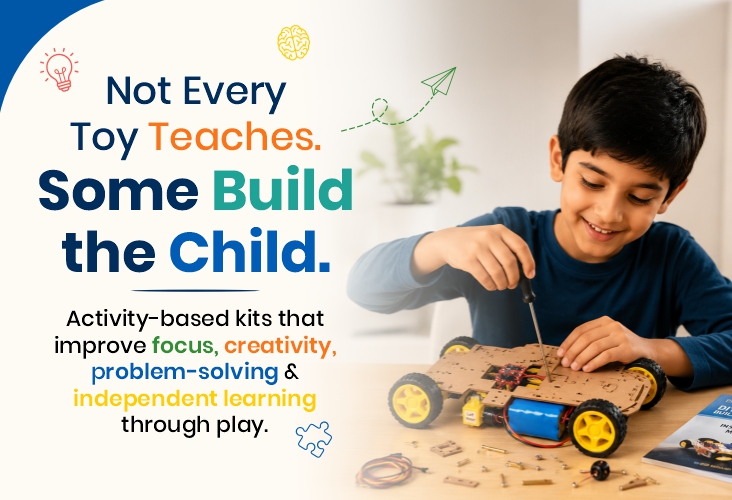
That's probably the biggest difference between STEM toys and other educational toys for kids: they encourage kids to act, not just passively watch. They participate in the concepts themselves, be it building a bridge, creating a circuit, or playing with the forces of magnetism.
Every action provokes thought:
"If I change this piece, what will happen?
Why did this structure collapse?
How do these gears turn together?
These questions develop the ability of logical reasoning and understanding cause-and-effect relationships, which is just what is needed for critical thinking.
STEM activities are not linear. Children have setbacks, make mistakes, and try again.
For example,
It teaches children to:
Repeated reflection upon failures, trying again, and persistence allow for deeper thinking, persistence, and mental flexibility.
Traditional toys usually have one right way to play.
But STEM toys are a different story; they're open-ended.
A set of building blocks can become -
What children learn while creating freely:
This combination of creativity and logic forms the bedrock of sound critical thinking.
After all, children learn concepts much better if they are relevant and tangible.
Examples:
And when children see such principles come alive in their hands, then they learn to apply thinking in real situations and not just in theoretical ways.
Many STEM learning toys require children to sort, put in order, classify, and compare items.
These actions develop the following skills:
These are the same cognitive processes used in mathematics, science, and even in everyday decision-making.
STEM toys create problems that children must solve independently.
This generates:
Children move from "Tell me how" to "Let me figure it out."
This orientation is relevantly important for academic success, career readiness, and even personal development.
1. Engineering & Construction Sets allow children to understand structure, balance, geometry, and planning.
2. Coding & Robotics Kits help develop logical sequencing, problem-solving, and computational thinking
3. Science Experiment Kits encourage hypothesis formulation, observation, and analysis.
4. Puzzles & Brain Games improve logical reasoning, spatial skills, and decision-making.
5. Math Manipulatives encourage counting, patterns, grouping, and quantitative reasoning.
6. Magnetic Tiles & Blocks nurture creativity, structure, and cause-and-effect understanding.
7. Simple Machines & Mechanism Toys introduce basic concepts of gears, pulleys, levers, and motion.
At Mittstore, these categories are the backbone of our curated range. Each and every one of our STEM products has been selected to align with one or more of these developmental purposes and support deeper thinking.
Children who use STEM learning toys feel more confident in mathematics, science, and reasoning-based subjects.
They learn to weigh choices, contrast options, and select the best course.
Hands-on activities require deep engagement and are a major developmental benefit in an age of digital distraction.
Most of the activities that involve STEM require collaboration, planning, and discussion skills that enhance social reasoning.
From engineering to AI, design, architecture, and research, the thinking rooted in STEM provides the backbone for careers in the 21st century.
STEM toys are not about learning science or math early; they are actually about learning to think. Understanding the importance of STEM education helps us see how they support the development of mindset, intelligence, personality, and curiosity in a child’s early years. These are nurtured by STEM toys for kids through exploration, experimentation, and hands-on learning.
They help children become curious, independent, analytical, resilient, creative, and confident problem solvers. We believe that at Mittstore, every child should have access to the tools that can build these skills. With the right toys, children do not simply play; they learn about the world around them and come to question it so that someday they are ready to change it.