If you close your eyes and imagine what your childhood felt like, what comes first to your mind? Fun? Are you playing? Maybe running, climbing, falling, trying again?
But today, with the fast-moving culture and screen-filled world, your imaginations are fading from reality. Children are indoors on average more than ever, and somewhere it comes with a cost to their physical health, emotional growth, and sometimes even creativity.
This is why outdoor play is so important in the early years, as it lays the building blocks of everything that will come around in their lives, call it the need of having a strong body or a sharper mind.
This blog is a detailed emphasis on why outdoor play is important, what the science behind it is, and why parents and schools make it an everyday part of young minds.
In fact, the first eight years of a child's life are the most important years in growth: both physical, cognitive, emotional, and social. Neural linkages, the connections between brain cells to communicate and form the basis of thought, memory, and behavior, are primarily established during these years, so every experience that leads to the development of the linkages has to be thoughtful and progressive.
Hence, outdoor play is not just “fun time”, but has become a necessity in the process of foundational development. Because it is through this play that children run, jump, balance, dig in the sand, and more, which helps develop neural pathways, adding to their holistic growth.
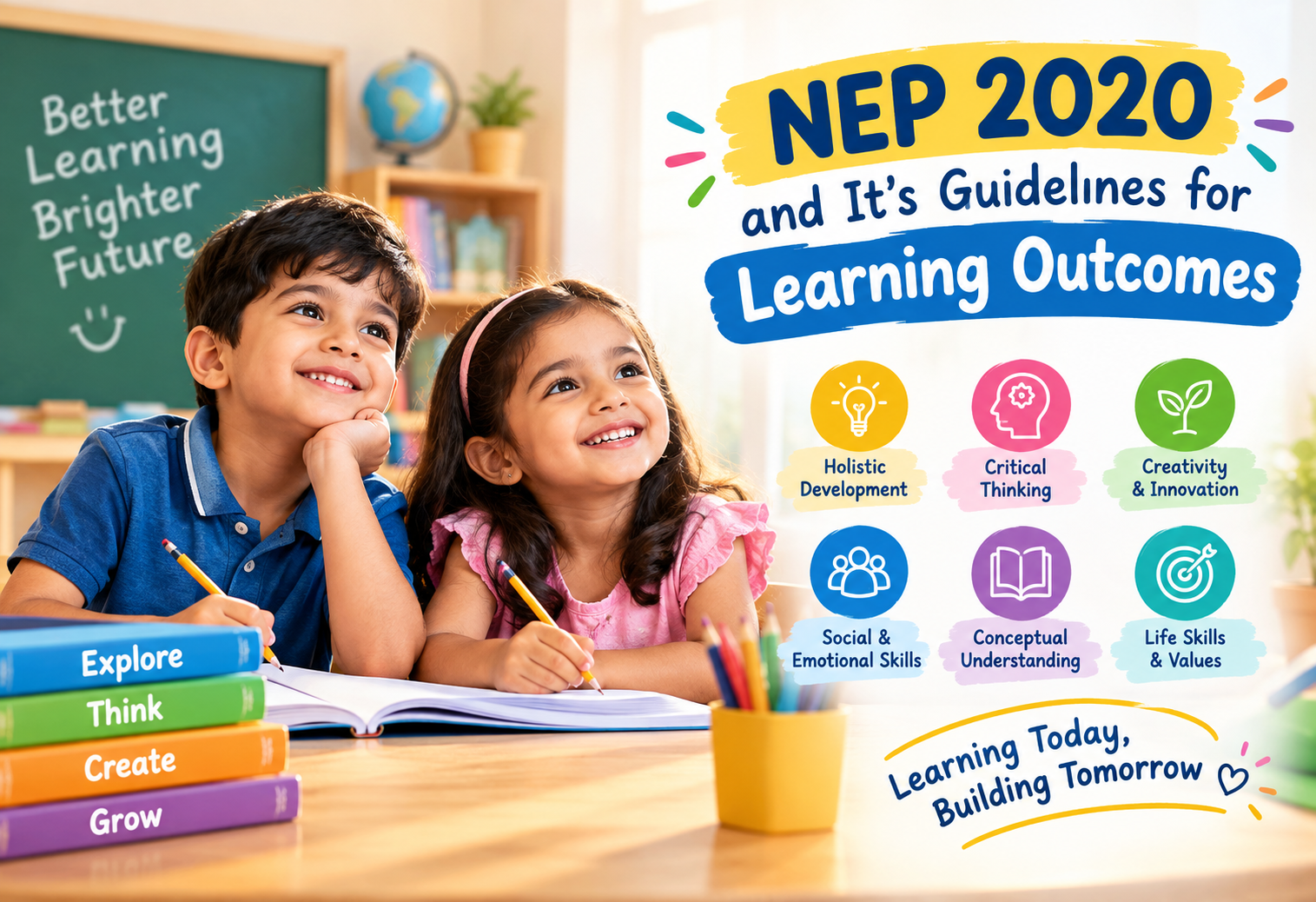
NEP 2020 also recognizes this and has termed play-based and activity-based learning the foundation of education in India.
One of the most natural extensions of that philosophy is outdoor play.
Indeed, numerous studies prove that children who spend more time outdoors have:
Let's understand how these benefits play out in early development.
Running, climbing, balancing, and playing outdoor games like tag and hopscotch help develop the following:
Gross motor skills involve: coordination of movements, balance, and body awareness.
Fine Motor: Grasp, manipulation, and precision will be developed through free play - picking up stones or shoe laces.
While Vitamin D from the sun provides resistance and immunity, movement provides support for heart and lung functioning.
Outdoor play is a great counter to the sedentary lifestyle that now pervades young children through screens and indoor routines.
Whenever the child plays out, every single experience develops thinking.
"How do I climb this tree?"
“What if I roll the ball harder?”
"Can we play a game using these sticks and stones?"
Self-motivated exploration enhances:
That's what we refer to as learning through play in the experiential education world at Mittsure.
Children learn principles like balance, motion, and cause-and-effect long before they can learn these from books.
Outdoor play is mostly a team sport and not a solo adventure. So children learn to share, wait for their turns, negotiate when needed, and empathize in the group games. If there is any disagreement, they learn to resolve it. So whether they lose or win, they learn to get up together, building resilience and self-confidence in their skills.
Unstructured outdoor play also teaches independence.
Children make choices and decisions, assess risks, and trust themselves, which are all very important life skills that no formal classroom can teach.
The early years are also the period when children first come into contact with nature, a relationship that can shape their values for life.
It develops the sensory awareness of a child and builds up emotional calm while playing outdoors. The chirping of birds, the feel of leaves, and touching mud help the child ground into the real world.
It acts like a gentle teacher in these times of continuous digital stimulation, reminding children to slow down, observe, and breathe.
Many studies note that when young children are taken outdoors, anxiety and hyperactivity tend to lessen.
The open space, movement, and presence of natural light release endorphins, the "feel-good" hormones which help maintain emotional well-being.
Outdoor playing also increases attention spans.
Spending more time outdoors regularly in childhood has been found to allow children later in their lives to pay better attention and have fewer behavioral problems. Their interest in academics tends to increase.
Yet, despite all these benefits, outdoor play is quietly disappearing from childhood.
Here's why:
While all these are valid concerns, the cost of lost outdoor play is much greater.
Besides this, when children are not given unstructured time to explore, they are also not developing very important life skills: creativity, resilience, and adaptability.
Just 30–60 minutes a day of outdoor play can make a big difference.
Sandwiching free play between lessons or before lunch keeps the children fresh and attentive in schools.
For parents, even the smallest evening walks or playing games on the terrace or in the garden count.
Consistency is more valuable than duration: make outdoor time a daily rhythm, rather than an occasional treat.
Not all play has to be guided.
Give children space to invent their own games, explore surroundings, and make up rules.
That's where creativity and confidence bloom.
This way they get to handle risk, solve their problems, and cooperate, skills that every early learner should build at an early age.
Outdoor activities can easily be connected to learning objectives:
Here, our philosophy of experiential education from Mittsure fitted perfectly: learning by doing, observing, and imagining.
With our range of educational equipment, we promote motion, investigation, and contact-even indoors-with the same spirit as outdoors.
Any small space at schools can be turned into a discovery zone: sand pits, mini gardens, or just outdoor reading areas.
Simple, natural materials-pebbles, water, leaves, or clay-can be used to build powerful teaching tools.
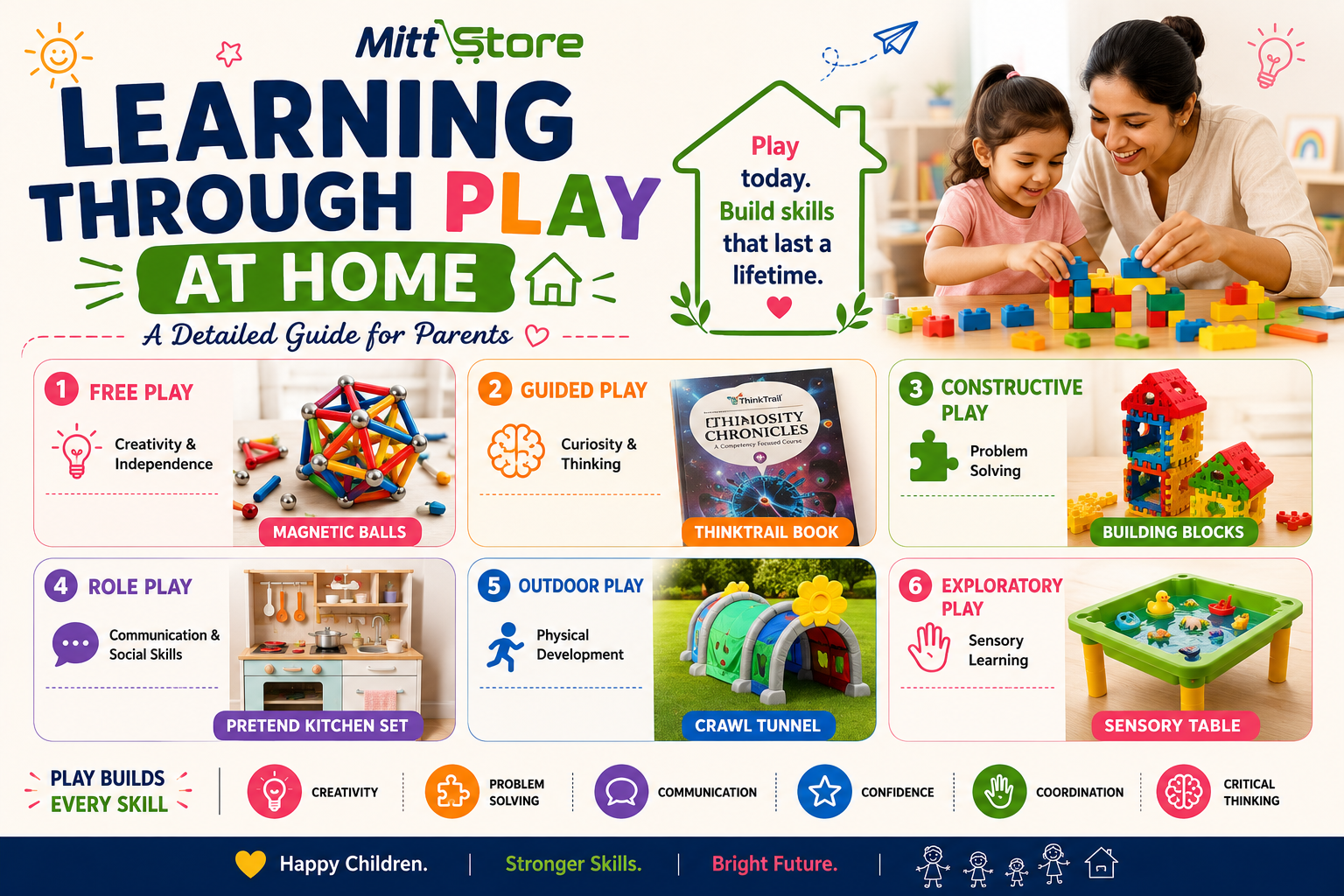
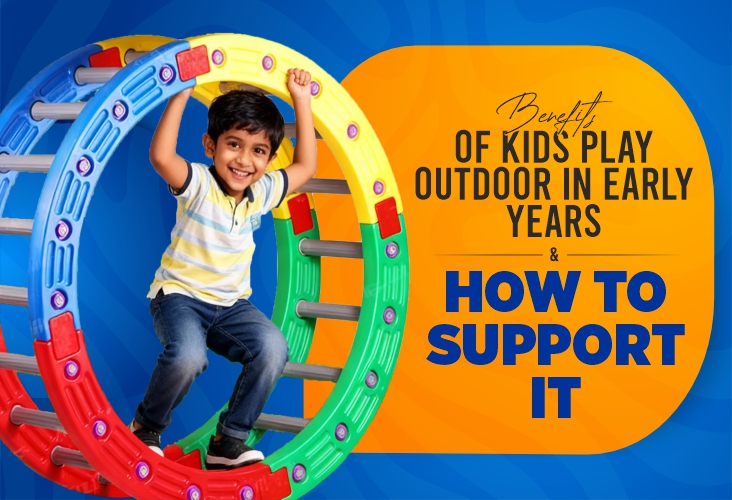
At Mittsure, we will always recommend activity corners in fundamental learning areas where the children can explore freely within bounds. That is why we bring a variety of outdoor games like trampoline, ramp track, playhouse, slides, tunnels, swings, etc.
Outdoor learning will blossom if it is supported at home. Schools may also encourage parent participation through "family play days" on weekends, nature walks, or parent–child activity challenges.
It is upon these very principles that Mittsure's approach to parent engagement works: the bridging of home and school learning so that curiosity flows freely across both worlds.
Instead of banning screens, balance them with real experiences. Introduce outdoor play as a positive option, not a requirement. When children feel the thrill of running, making, or discovering in the great outdoors, screens naturally lose their allure.
The greatest support parents can provide for children is a chance to explore without fears of making mistakes. Falling, failing, and trying again are integral parts of outdoor play - and of learning itself.
In every scraped knee is a story of resilience. Every puddle-jump teaches freedom. These are the lessons that build confidence for life.
Play is not the opposite of learning - it is learning. Every outdoor experience connects to core developmental goals. And Mittstore makes it easy for educators to implement the outdoor games effectively. Explore the products and make foundational education easy and efficient.